“My child hits” – should I be worried?
When a child hits a friend, bites while getting dressed, or throws a toy, it is easy to feel angry, embarrassed or helpless. This is especially true when it happens in front of other people. One such incident does not necessarily mean there is a serious problem, but it is worth responding straight away and clearly.
Your child may be experiencing anger, disappointment or jealousy. These emotions are normal, even when they are very intense. The boundary is about behaviour: hitting, biting, kicking or throwing something at another person is not acceptable.
Rather than focusing only on the hit itself, try to look at the situation more broadly. What happened just beforehand? Was your child tired, hungry, irritable, or fighting over a toy? This context can often suggest ways to prevent further difficult moments.
In this article, you will find guidance to help you:
- recognise when aggressive behaviour may be part of a developmental stage;
- notice situations that particularly increase tension;
- respond calmly, without shouting or shaming;
- know when it may be helpful to speak with a paediatrician or child psychologist.
Why might a young child hit, bite or push?
Between around 18 months and 6 years of age, children are still learning to manage strong emotions. They may want something immediately, struggle to accept being told no, or not yet know how to wait their turn. In these moments, their hands and body may react faster than their words.
This does not mean aggressive behaviour should be ignored. A child needs an adult who will calmly stop them and show them another option. Over time, they can learn to say “I don’t want to”, “my turn” or “help me” instead of hitting.
Around 18–36 months: big emotions, few words
At this stage, children often have a strong need for independence. They want to walk up the stairs on their own, choose their clothes or decide when playtime ends. When an adult has to say “no” or hurry them along, frustration may come out as shouting, throwing something or hitting.
Moments of rushing can be particularly difficult. Getting dressed in the morning, leaving the house, shopping or coming home from the playground can be very overwhelming for a toddler. It can help to limit the number of instructions and use short, simple sentences.
Around 3–6 years: conflicts become more noticeable
Older children have more opportunities for disagreements with peers. Who goes down the slide first, who is holding the favourite toy, who decides the rules of the game – these are very important matters to a child. Even if they can already express themselves well, when they are very angry they may return to pushing, pulling or kicking.
In practice, a quick, calm response works well. You could say: “I won’t let you push. Say that you want that toy now.” The goal is not a long explanation in the middle of a crisis, but stopping the behaviour and giving your child simple words to use.
Rough-and-tumble play does not always mean someone is being hurt
Children sometimes play chasing games, monsters, superheroes or pretend fighting. This kind of play can be fine if everyone involved wants to take part, can say “stop”, and nobody feels pain or fear. It is helpful to agree on simple rules in advance, for example: no hitting faces, no kicking, and stop immediately when someone says “enough”.
The situation is different when one child constantly dominates, does not respond to objections, or deliberately hurts someone. In that case, an adult needs to be present and clearly stop the play. It is not a good idea to assume children will “sort it out themselves” if one of them clearly does not feel safe.
What is most often behind aggressive behaviour in children?
Aggression rarely appears completely out of nowhere. More often, it is a sign that a child is struggling to cope with tension in that moment. This does not excuse hitting, but it can help you better understand what your child may need.
Before looking for complicated explanations, check the basics. It is harder for children to stay calm when they are hungry, thirsty, overtired, or have spent a long time in noise and crowds. Sometimes a small snack, a chance to move, or going home earlier can genuinely change how the afternoon unfolds.
Common triggers include:
- hunger, thirst and tiredness;
- too much noise, too many people or too many activities;
- suddenly being asked to stop an enjoyable activity;
- difficulty completing a task;
- conflict over an object, an adult’s attention or a place in a game;
- changes to the household’s daily routine.
Big changes can also affect a child’s behaviour. A new group at nursery or preschool, moving house, the arrival of a sibling or a change in the daily schedule may make a child more irritable. This does not mean that every change should be avoided – rather, it is worth preparing your child for it in small steps.
A simple observation that can explain a lot
For a few days, make brief notes about more difficult situations. You do not need to keep an extensive diary – 2–3 sentences after each incident are enough. This can make it easier to notice whether the problem becomes more intense at a particular time or in certain places.
You might note down:
- What was happening before the outburst?
- What was the conflict about?
- Had your child slept and eaten as usual?
- What helped them calm down?
- How long did the tension last?
These notes are not meant to judge your child. They can help you notice, for example, that difficult behaviour happens mainly before dinner, after a long day in childcare, or when sharing particular toys.
When can aggression be part of development, and when does it need more attention?
Assess the situation more broadly than through one incident
It can be helpful to look at several elements at once. This assessment is not about labelling your child, but about noticing a pattern and taking appropriate steps.
| Area | What to pay attention to |
|---|---|
| Age and development | Consider which skills your child is still developing: waiting, sharing, naming emotions, asking for help and stopping an impulse. Take into account whether they can accept adult support and use simple prompts. |
| Frequency | Check whether the incident was isolated or forms a repeating pattern. Make a note of when the behaviour returns and whether it occurs in different situations. |
| Intensity | Observe the strength of the behaviour and whether it can be stopped with a calm, clear adult response. It is also important to notice how your child responds after being stopped and whether they regain connection over time. |
| Injuries and damage | Pay attention to whether there is pain, injury, damage to belongings or situations that threaten safety. In these moments, make sure your child and the environment are safe first. |
| Situations | Check what comes before the behaviour: tiredness, hunger, noise, being told no, rushing, conflict over an object or an adult’s attention. When the difficulty concerns a particular situation, articles about a child hitting parents, biting in children, a child throwing objects and sibling conflicts may also be helpful. |
| Changes over time | Compare observations from consecutive days and weeks. Notice whether behaviours lessen, become more intense, change form or appear in new places. |
| Impact on daily functioning | Consider whether the difficulties limit play, relationships with family and peers, outings, time in childcare, or the family’s everyday sense of calm. |
Parents often ask whether it is possible to set one clear dividing line. In practice, what matters more than a single hit is what the overall repeating pattern looks like. Frequency, intensity, consequences and the child’s ability to calm down all matter.
A less concerning situation may be when a child occasionally pushes after having a toy taken away or throws an object at the end of a very tiring day. If, over time, they accept support and an adult consistently shows other solutions, the behaviour may gradually become less intense. It still needs to be stopped, but it is not helpful to draw far-reaching conclusions from one crisis.
Look at what keeps happening
It is worth taking more careful action if difficult behaviours return very frequently and in many settings. This is not about attaching a label to your child. It is about checking whether everyday ways of supporting them are enough.
Pay attention to whether:
- your child regularly hurts others or themselves;
- aggression also occurs without an obvious conflict;
- it is difficult to stop the behaviour without physically separating the children;
- similar situations happen at home, at the playground and in childcare;
- after intense anger, your child cannot reconnect for a long time;
- conflicts limit shared play, outings or the family’s daily functioning.
The impact matters, not only the intention
Even a young child does not always understand that they may hurt someone. That is why an adult should respond to the impact of the behaviour rather than conduct a long investigation into intentions. If your child bites, kicks or throws hard objects, make the situation safe first.
Once they have calmed down, you can return to what happened. Briefly say: “You were very angry. Biting hurt. Next time, come to me or say: stop.” This kind of sentence combines a boundary with guidance about what to do differently.
When should you contact a paediatrician or child psychologist?
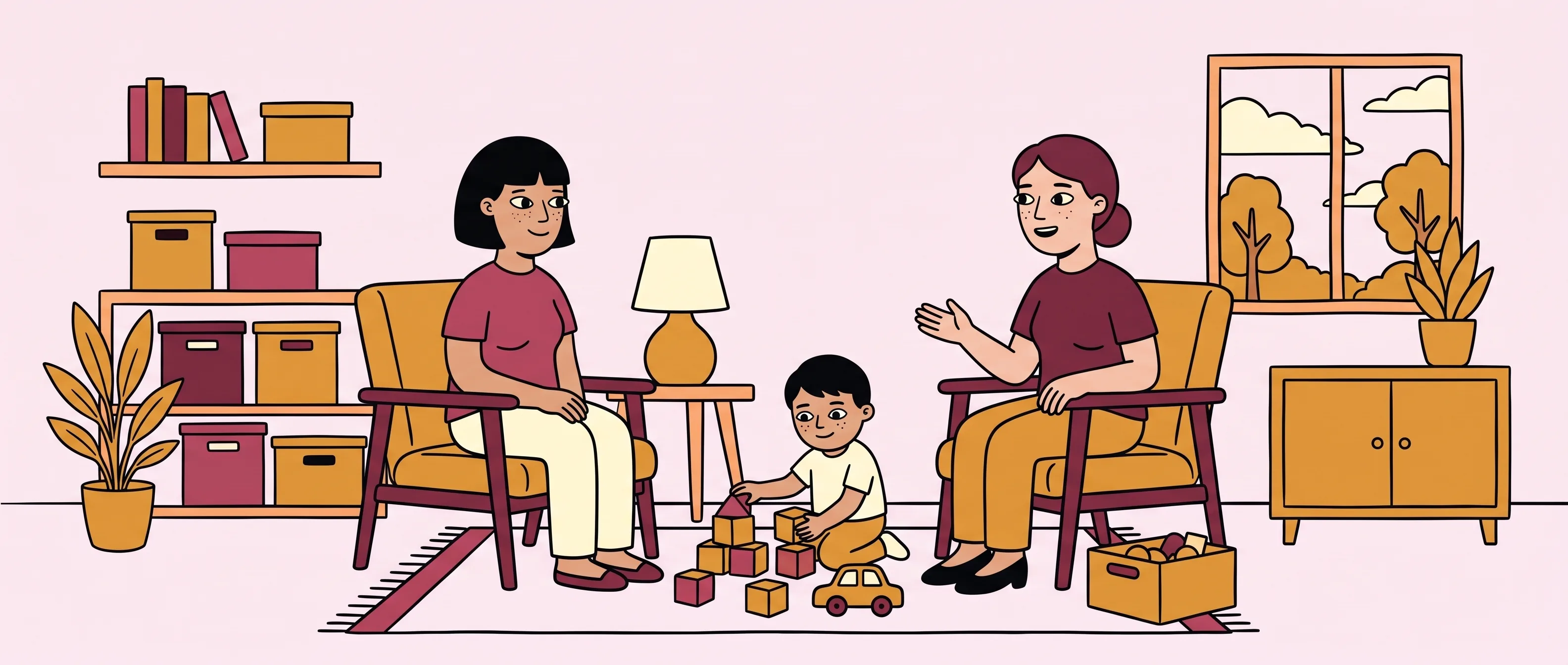
If aggression is clearly increasing, often leads to injuries or places a heavy strain on your everyday life, it is worth discussing the situation with a paediatrician or child psychologist. A consultation is not a judgement of your child or your parenting. It can help organise your observations and choose practical steps you can use at home.
In particular, do not put off seeking advice when:
- the behaviour creates a real risk to your child or other people;
- your child regularly hits, bites, kicks or destroys objects;
- outbursts are very intense and difficult to stop safely;
- the problems make it difficult to function at nursery, preschool or at home;
- your child remains highly distressed for a long time and finds it hard to reconnect with others;
- family members live with constant stress about the next outburst.
If the situation is very severe or safety is at risk, a paediatrician can advise on further support. You do not need to wait until the difficulties become even greater. Addressing the situation earlier can bring parents more calm and clarity.
Before the consultation, prepare brief notes from a few days. Record the time, place, course of the incident, sleep, meals and what helped your child calm down. Specific information makes the conversation much easier than a general statement such as: “He often gets angry.”
How should you respond straight away when your child hits or bites?
In the middle of a crisis, you do not need to have a long conversation. A child experiencing strong emotions is usually not ready to listen to explanations or answer questions. First make sure everyone is safe, then help reduce the tension, and only afterwards return to repairing the situation.
1. Stop the behaviour calmly and firmly
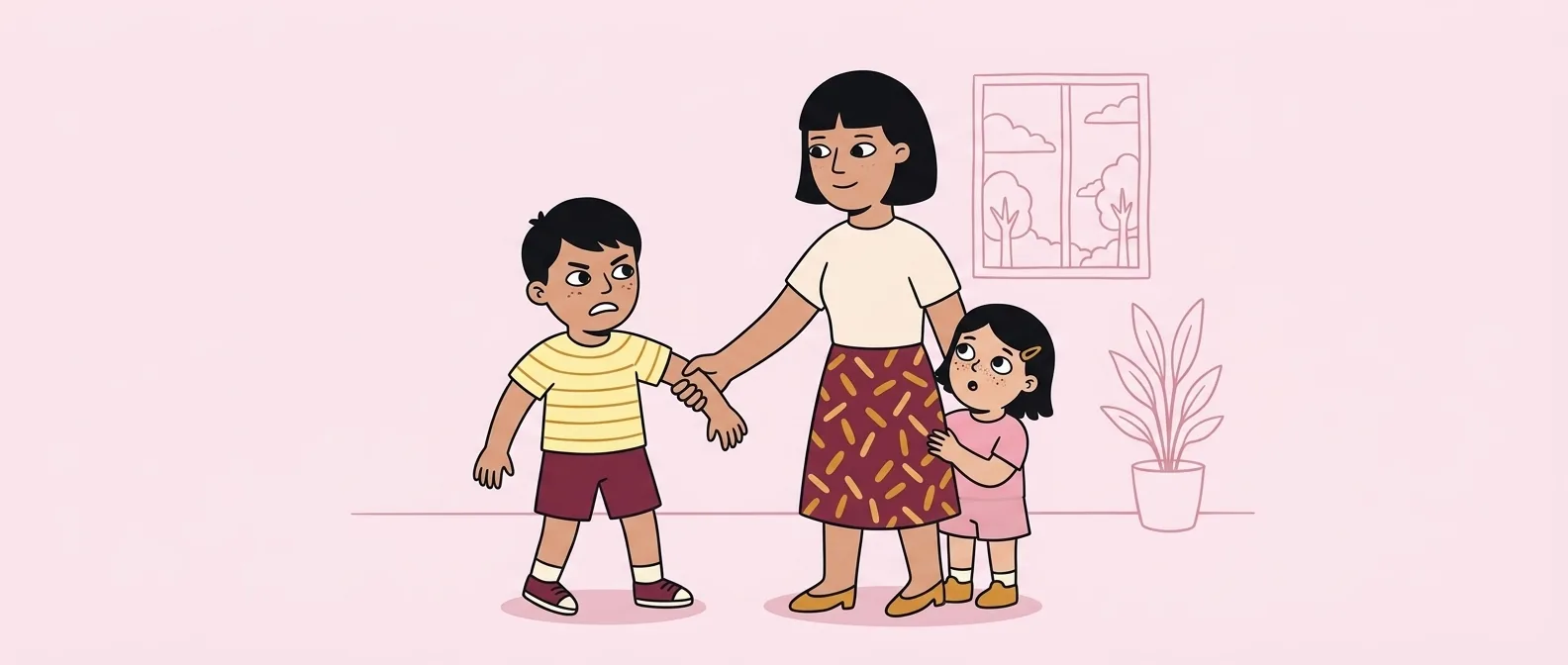
Move your child away from the other person, secure an object that could be thrown, or block a blow with your hand. Do this without shouting, pulling or making long comments. Your response should be clear: you will not allow anyone to be hurt.
You can say:
- “I won’t let you hit.”
- “I’m stopping the biting.”
- “I won’t let you kick.”
- “I’m putting this object away because throwing it is dangerous.”
2. Name what your child may be feeling
You do not have to get everything exactly right. A simple attempt to name the situation is enough: “You’re angry because you wanted to stay longer” or “You’re disappointed because your brother would not give you the toy”. Your child does not need to agree straight away.
Speak more quietly and slowly than usual. Sometimes it is better to stay close without many words than to ask more questions. If there are lots of stimuli, move to a quieter place or step away from the source of the conflict.
3. Offer a safe way to release tension
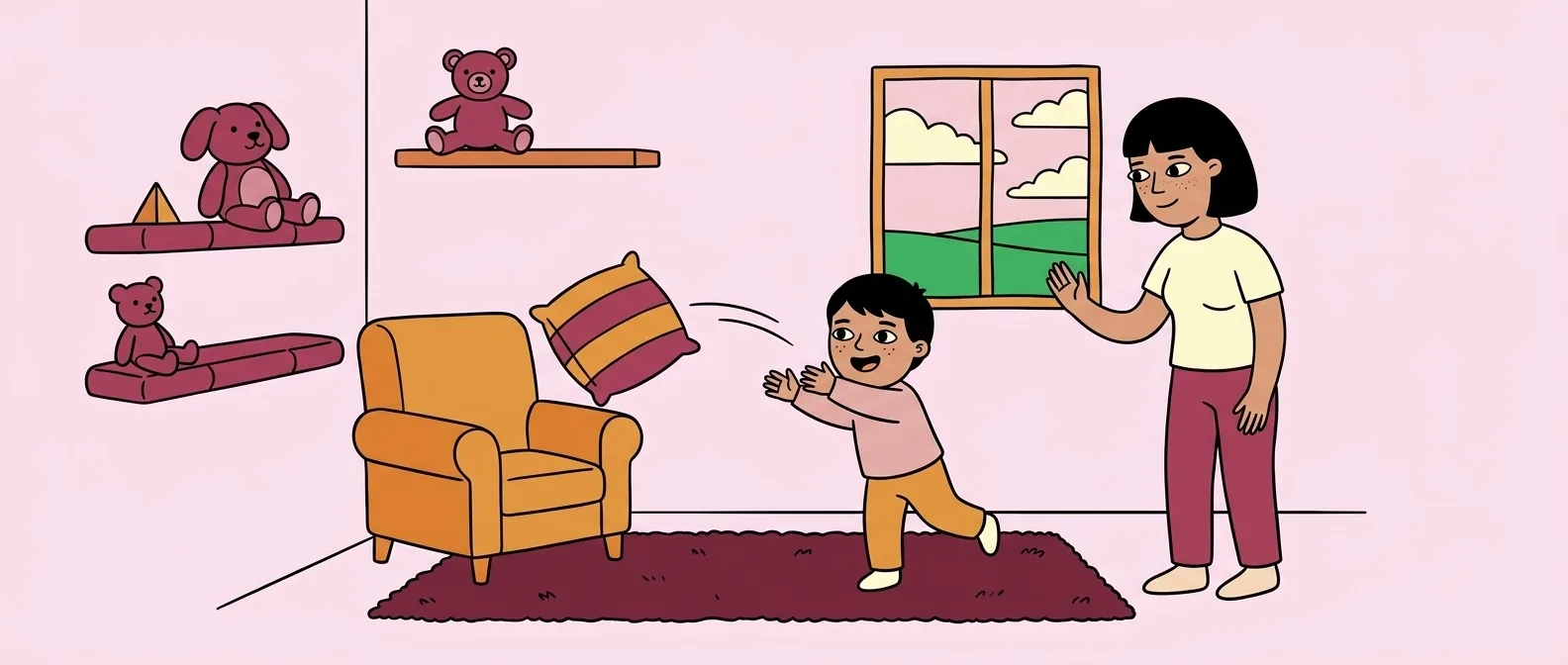
After stopping the aggression, give your child a simple alternative. For a younger child, you might suggest stomping their foot, giving a pillow a big hug, stepping away, or coming to you. An older child can practise using phrases such as: “I don’t want to”, “my turn”, “give it back” or “help me”.
Not every suggestion will work immediately. The most important thing is to return to the same simple solutions when your child is calm, too. Under stress, it is easier to use something that has already been practised many times.
4. Return to the situation after your child has calmed down
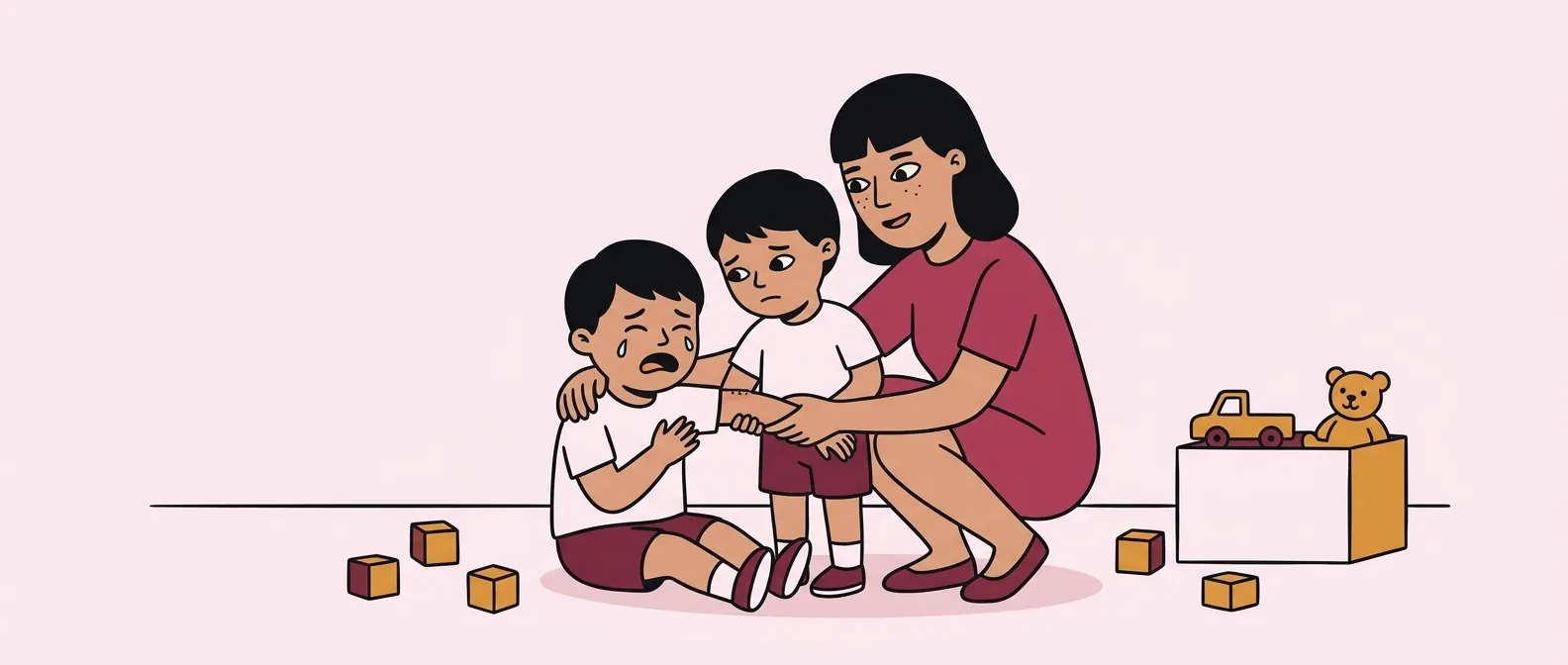
When emotions have settled, briefly name the impact of the behaviour. You might say: “The block hit your sister, so her arm hurts.” Then suggest a way to make amends that is appropriate for your child’s age.
Your child might help pick up thrown items, bring a tissue, return something they took, or ask whether the other person needs a moment of quiet. An apology is meaningful when your child is ready, not as a forced obligation in the middle of anger.
How can you reduce difficult situations in everyday life?
It is not possible to completely remove anger from a child’s life – and there is no need to do so. The goal is instead to create conditions in which your child has more opportunities to practise calmer responses. Small, repeated actions help more than one “perfect” method.
Look after the daily routine
For many children, predictability provides a sense of safety. Regular times for meals, sleep, movement and rest can reduce the number of moments when tension quickly gets out of control. Not every day will look the same, but it is worth keeping a few fixed points.
Helpful ideas may include:
- water and a snack before a longer outing;
- daily movement, even if it is only a walk or playtime at home;
- some quieter time after preschool or an intense social occasion;
- limiting extra activities when your child is already tired;
- a consistent evening routine that does not drag on.
Give advance notice of changes and the end of play
A sudden “we’re leaving right now” often causes more protest than a warning a few minutes earlier. Try preparing your child: “In five minutes, we’ll start getting ready to leave. You can go down the slide two more times.” Your child may still disagree, but they have more time to adjust to the change.
Simple messages before everyday tasks can also help. “First we wash our hands, then we sit down for lunch” is clearer for a child than several instructions at once. When tidying up, divide the task: “You put away the cars, and I’ll stack the books.”
Practise words and behaviours when your child is calm
Do not wait until the middle of a conflict to teach “stop” or “my turn”. Use play with figurines, dolls or soft toys. Act out a short scene: one toy takes a block from another, and the other says “I don’t want that” and asks an adult for help.
You can also practise behaviours without words. Take two steps away from the “argument”, place a toy on the table instead of throwing it, or show a stop sign with your hand. These simple exercises are more useful than long lectures.
How can you tell whether the approaches you are using are helping?
Do not judge changes based on one good day or one difficult afternoon. A child’s behaviour can fluctuate, especially during tiredness, illness or major changes at home. Instead, look for small signs of improvement over the following weeks.
Progress may look like this:
- there are fewer incidents;
- your child hits less hard or stops more quickly;
- they find it easier to accept you stopping them;
- they more often use a word or gesture, or walk away from the conflict;
- they reconnect more quickly after a crisis;
- pain, damage or major arguments happen less often.
It is worth noticing even small changes. If your child came to you crying instead of kicking, that is already a different way of coping with tension. You can name it specifically: “You came for help instead of pushing. That was safe.”
What is best avoided?
Shouting, ridicule, threats and physical punishment may stop a child for a moment, but they do not show them what to do next time. The same is true of calling a child “aggressive”, “bad” or “naughty”. It is better to speak about the specific behaviour: “I won’t let you bite”, rather than judging your child as a person.
It is also not helpful to force an apology while your child is still crying, shouting or struggling. They need to calm down first. Only then can they understand what happened and how the situation can be repaired.
Summary: boundaries and calm help more than punishment
Children can feel angry, but they cannot hurt others. This is a simple rule worth returning to in every difficult situation. Calmly stopping the behaviour, using brief words and showing an alternative gives your child a clear message without shaming them.
Look at aggressive behaviours in a broader context. Check sleep, hunger, tiredness, changes in the daily schedule, conflicts over toys and situations that regularly trigger tension. This makes it easier to respond earlier, before emotions reach their highest point.
If the behaviours are frequent, intense, lead to injuries or make everyday life much harder, discuss the situation with a paediatrician or child psychologist. You can also organise your observations and next steps through the consultation form.
Sources
- American Academy of Pediatrics (AAP), “10 Tips to Prevent Aggressive Behavior in Young Children”.
- American Academy of Child and Adolescent Psychiatry (AACAP), “When To Seek Help For Your Child”.
- National Institute for Health and Care Excellence (NICE), “Antisocial behaviour and conduct disorders in children and young people: recognition and management”.