When Your Child Hits: Where to Start?
“My child hits me—what should I do?” This question often comes after a difficult, sudden incident, when anger mixes with helplessness. Being hit can hurt not only physically, but emotionally too.
Hitting is not something you need to accept, but it also does not mean that there is “something wrong” with your child or that you have failed as a parent. Young children are still learning how to talk about anger, disappointment, and their needs. When the tension feels too overwhelming, their hands may act faster than their words.
In practice, the most important sequence is simple: stop the hitting, make sure everyone is safe, and set a boundary without shouting. Only later is there room for conversation, practising other responses, and looking at what triggers this behaviour.
In this article, you will find practical guidance on:
- how to respond in the first moment after your child hits;
- what to say so that the boundary is clear;
- how to teach safer ways of expressing anger;
- when everyday strategies may not be enough and it may be worth considering professional support.
Why Do Children Hit?
Children do not usually hit because they deliberately want to hurt their parents. More often, it is a quick reaction to emotions they do not yet know how to manage. Being told they cannot watch another episode, having a toy taken away, or needing to leave the playground can feel much harder for a child than it may seem from an adult’s perspective.
One thing is important: understanding the reason for the behaviour can help explain it, but it does not excuse hitting. The boundary should still remain consistent and clear.
Anger, Frustration, and Not Having the Words
A child may hit when they want something, do not want to stop doing something, or feel they have been treated unfairly. They may not yet be able to say: “I don’t want to,” “Help me,” “It’s my turn,” or “I’m angry.” Especially for younger children, an emotion can take over their behaviour very quickly.
Instead of immediately asking, “Why did you hit me?”, try naming the situation once your child has calmed down. You could say: “It was hard for you to stop playing” or “You wanted that thing and you got really upset”. You do not have to get it exactly right—the goal is to show your child words they may eventually use instead of their hands.
Tiredness, Hunger, and Too Much Stimulation
Sometimes a single hit is the end of a long, tiring day. Your child may have less patience after preschool, shopping, travelling, a family gathering, or noisy play. Hunger, sleepiness, illness, and rushing can also noticeably lower their tolerance for frustration.
It can be helpful to notice whether hitting happens more often:
- before meals or bedtime;
- right after getting home;
- while getting ready to leave;
- during arguments over toys;
- in noisy, crowded places;
- when your child is given several instructions at once.
You do not need to keep a detailed diary. For a few days, it is enough to make a note on your phone of the time, place, and what happened just before the difficult situation. This simple overview often makes it easier to spot a recurring pattern.
How to Respond When Your Child Hits
In the moment your child hits, there is no need to launch into a long parenting talk. A child who is crying, screaming, or still trying to hit is unlikely to benefit from lots of explanations. First, they need the situation to be stopped and a calm adult nearby.
Step 1: Make the Situation Safe
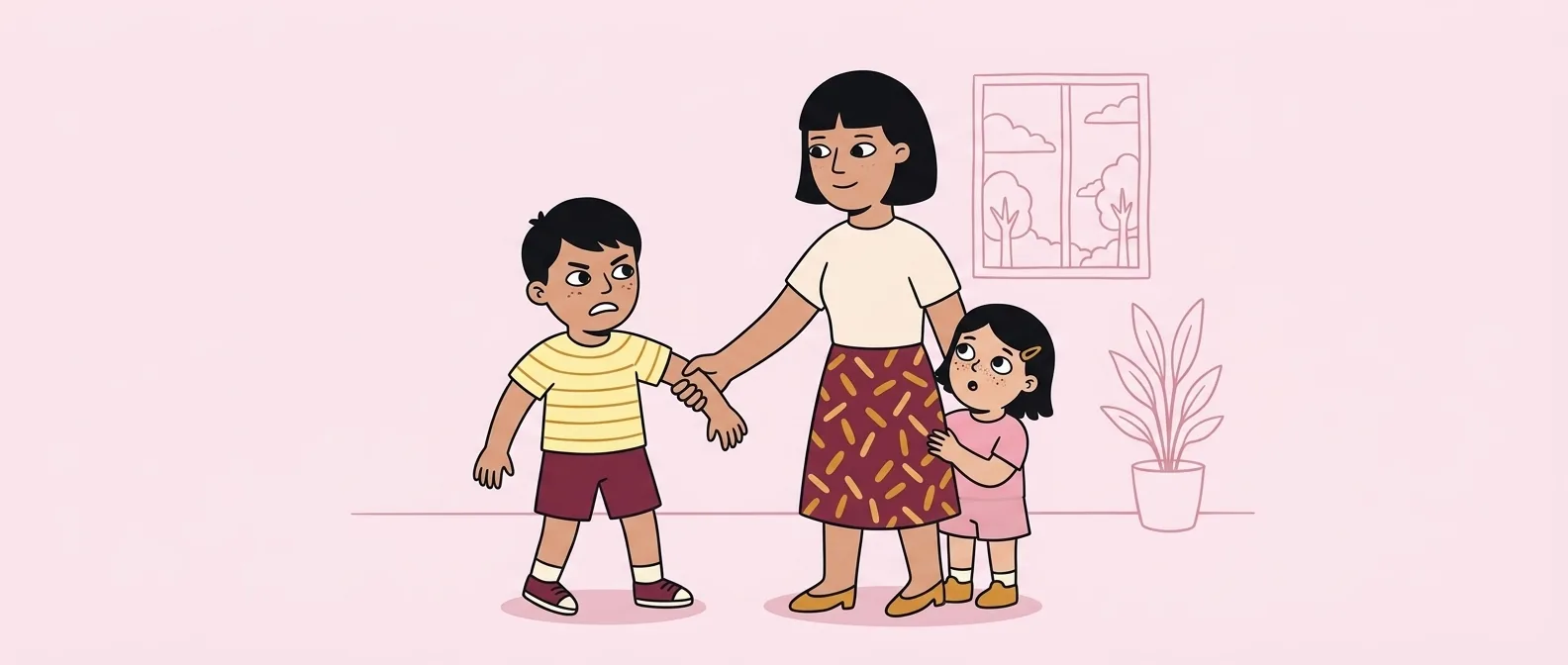
Check whether anyone has been hurt and whether there are objects nearby that could cause injury. If your child is holding a toy, stick, or another hard object, move it out of reach. If they are hitting a sibling or another child, calmly separate them.
You do not need to do this roughly, but act with confidence. You can stand between the children, move them apart, or hold your child’s hand to prevent another swing. The goal is to stop the hitting, not to punish your child.
Step 2: State a Short Boundary
Use one sentence, spoken in a calm and firm voice. Do not explain the whole situation right now, negotiate, or ask for details. A short message is easier for a child to hear than a long lecture.
You could say:
- “I won’t let you hit.”
- “Stop. Hitting hurts.”
- “I’m stopping your hand.”
- “We don’t hit people.”
- “I’m here with you, but I won’t let you hit me.”
You do not need to come up with new words every time. Repetition helps your child connect your response with a clear rule.
Step 3: Lower the Tension
If you feel you are about to shout, you can say out loud: “I’m very upset. I’m going to step back and calm my voice. I won’t let you hit.” Stand in a way that still limits the risk of another hit, relax your hands, and take a brief break from talking. Return to the conversation only when you can speak more calmly.
If you notice your own voice getting louder, pause for a moment and take a calmer breath. This does not mean being permissive. It is a way to avoid adding another layer of tension to an already difficult moment.
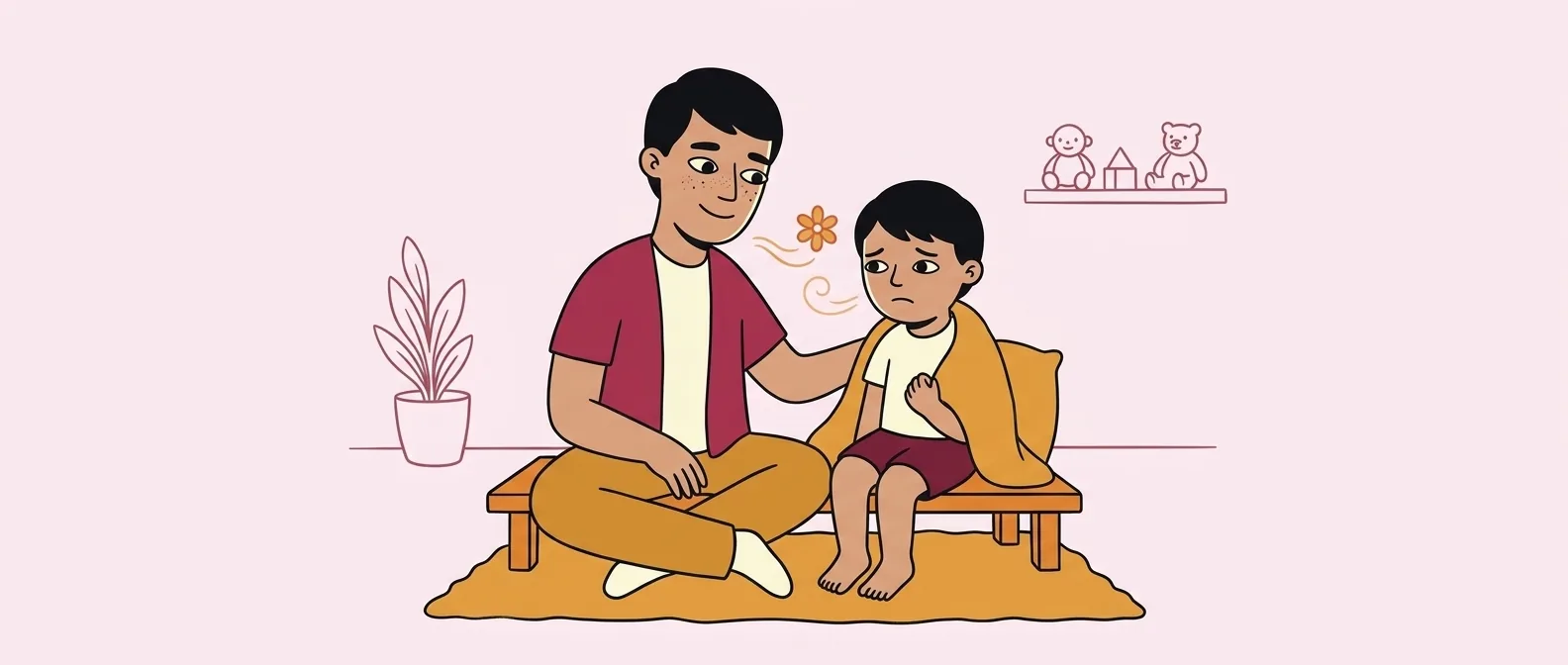
Your child may need a few minutes of closeness, quiet, water, or a break from a noisy place. You could say: “I can see you’re very angry. I’ll sit next to you.” If they do not want contact, stay nearby and continue to keep everyone safe.
Step 4: Return to the Conversation Once Your Child Is Calm
Only when your child’s body has clearly relaxed, their voice is calmer, and they are no longer trying to hit can you briefly return to what happened. Do not turn it into an interrogation. Two or three simple sentences are enough.
For example: “You wanted to keep watching the show. You got upset and hit me. Next time, say: ‘A little longer,’ or come and ask for help.” This kind of sentence connects the emotion, the boundary, and a specific alternative.
What to Say Depending on Your Child’s Age
It is worth adapting your words to how much your child can understand and say in a difficult moment. The younger the child—or the bigger the emotions—the shorter the message should be. It is not about finding the perfect phrase; simplicity and calm matter most.
Around 18–36 Months
A toddler may understand individual words well but may not always be able to respond to them when angry. Pair your words with action: stop their hand, move away, or separate the children, then name the boundary.
These short phrases may help:
- “Stop. No hitting.”
- “Gentle hands.”
- “That hurts.”
- “No. I’m moving you away.”
- “Anger is okay. Hitting is not.”
During calm moments, practise simple words and gestures: “stop”, “help”, “I don’t want to”, “my turn”. You can show an open palm as a stop sign or repeat one short sentence together during play.
Around 3–6 Years
An older child may benefit from a slightly longer message. Still, avoid using too many words, especially just after they have hit. Start with the boundary, then name the emotion and point to another option.
Try sentences like these:
- “I can see you’re angry. I won’t let you hit.”
- “You can be angry, but you can’t hit.”
- “Say: ‘I don’t like that.’”
- “Take a step away or ask me for help.”
- “You want that toy. Use words, not hands.”
Some children find it easier to say “stop”, while others need to step away for a moment or ask an adult for help. It is better to choose one or two simple strategies than to overwhelm your child with lots of ideas at once.
When Your Child Hits Other Children
Conflict between children can escalate very quickly. Do not wait for them to “work it out” if hitting, kicking, biting, or pulling has started. Move close and calmly take charge of safety.
First, separate the children and remove any objects that could make the situation worse. Say: “Stop. I won’t let you hit.” There is no need to shame your child publicly or force them to apologise immediately.
Then turn your attention to the child who was hit. You could say: “I can see that hurt. I’m going to check that you’re okay.” If they need a bandage, water, a quiet moment, or a cuddle from their caregiver, take care of that first.
Return to the child who hit once the situation is calm. You can name what was difficult: “You wanted the spade, but you can’t hit to get it.” Then suggest the next step: give the item back, ask for a turn, step away for a moment, or ask an adult for help.
At nursery or preschool, it can be helpful to calmly ask when these situations happen most often. Information about the time of day, type of play, noise, changes to the routine, and arguments over specific items can be useful. This makes it easier to respond in similar ways at home and elsewhere.
What to Do After Your Child Hits
Once things have settled, there is no need to return to the incident for a long time. A short conversation should help your child understand what they can do next time. Lengthy explanations, shaming, or bringing up past behaviour usually do not lead anywhere helpful.
You can use a simple framework:
- Name the situation: “You wanted to be first.”
- Name the boundary: “Hitting is not okay.”
- Offer an alternative: “You can say: ‘My turn now.’”
- Practise it briefly: “Let’s say it together.”
Making Things Right Instead of Forcing an Apology
The word “sorry” is meaningful when your child is calmer and understands what happened. Forcing it right after crying or anger may result only in a mechanical repetition of the word. It is better to invite your child to take a simple action that helps the other person.
You could suggest:
- offering a tissue or a cold pack;
- asking: “Are you okay?”;
- returning something they took;
- helping to tidy up scattered blocks;
- a brief “sorry” if your child is ready.
If your child refuses, do not drag out the conversation. Take care of the person who was hurt and return to practising how to make things right later, for example while playing with figures or stuffed animals.
What Is Best to Avoid?
Hitting a child “to show them how much it hurts”, shouting, name-calling, threats, or humiliation may stop the situation for a moment, but they do not teach a safe response to anger. Your child receives a lot of emotion and very little guidance about what they can do differently.
Also avoid labels such as: “You’re aggressive”, “You’re naughty”, or “You always do this”. It is better to talk about the specific behaviour: “You hit. I won’t allow that.” Your child needs to know that the boundary applies to their actions, not to their worth as a person.
How to Teach Your Child Alternatives to Hitting
Simply saying “Don’t hit” after an incident is usually not enough. Your child needs a ready-made idea of what to do instead. It is best to practise these solutions when they are calm, well-fed, and have time to play.
Choose One Simple Skill
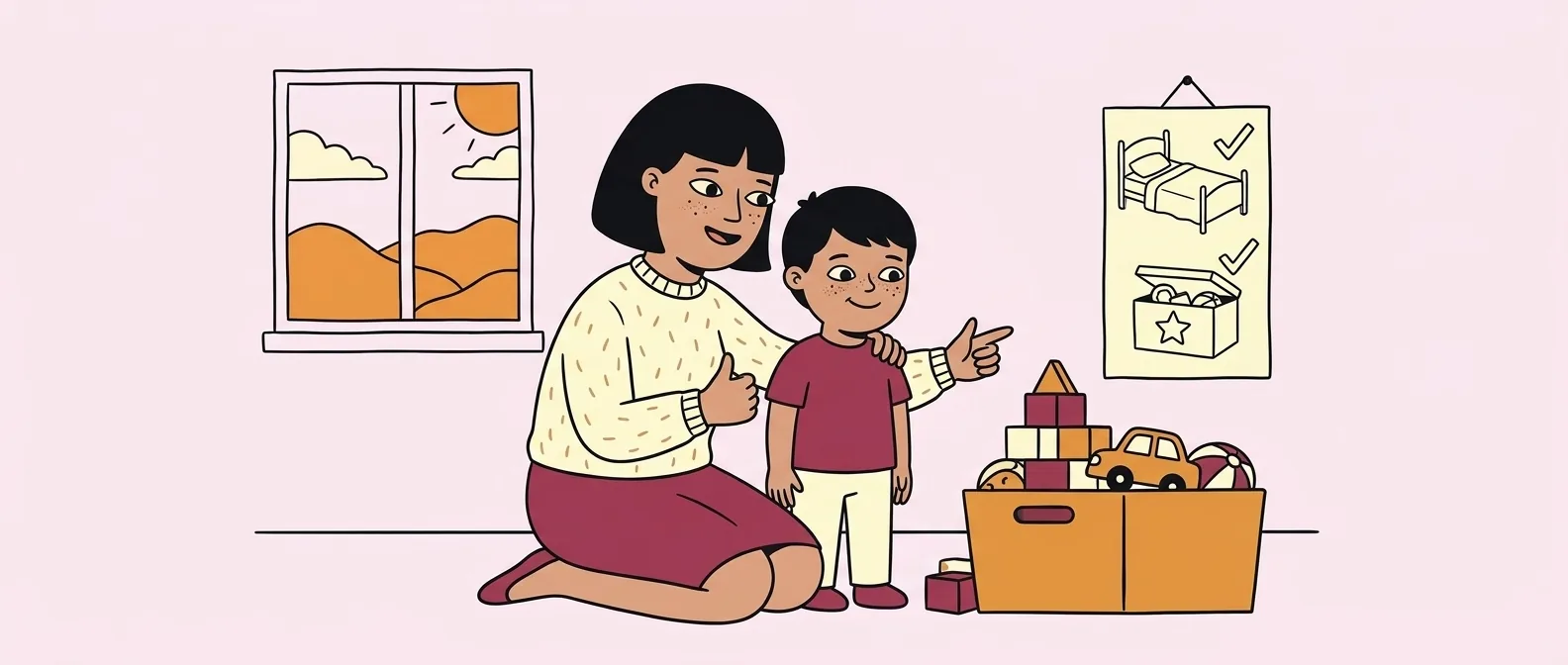
To begin with, choose just one skill, such as asking for help. In everyday situations, show your child how to use it. You could deliberately close a box that is difficult for them to open and prompt them: “Say: ‘Help.’”
When your child tries, respond as quickly as you can. Say: “I heard you ask for help, so I’m helping.” This helps your child see that words work and bring a real result.
Practise Before a Difficult Moment
If conflicts often happen around toys, remind your child of a simple strategy before they begin playing together. You could say: “When you want the truck, say: ‘My turn,’ or come to me.”
Similarly, before leaving the playground, it helps to give your child advance notice of the change. Instead of suddenly saying, “That’s it, we’re leaving,” try: “We’re going home in five minutes. We’ll have two more turns on the slide.” It is easier for children to manage a transition when they know what to expect.
Play Out Difficult Situations
Stuffed animals, figures, and blocks are great for short role-play scenarios. One teddy wants another teddy’s toy—what can they do? You can model one response: ask, wait, say “stop”, or go and get help.
These do not need to be long exercises. A few minutes is enough if you return to them regularly. Notice your child’s specific actions:
- “You said ‘stop.’”
- “You came to ask for help.”
- “You waited for a moment.”
- “You moved away instead of hitting.”
How to Reduce the Risk of More Hitting
You cannot—and do not need to—remove every difficult emotion from your child’s life. But you can reduce situations in which tension builds too quickly. It helps to notice especially challenging moments in advance.
Before going out, shopping, meeting other children, or ending playtime, consider whether your child has the energy for the next task. Sometimes a short snack, a quiet moment, less rushing, or postponing a difficult conversation can be the better option.
Make Transitions Easier and Give Short Instructions
Children often find it difficult to switch activities, especially when they are enjoying themselves. Give advance notice of important changes and offer a simple plan. Instead of giving several instructions at once, choose one: “Shoes first”, then give the next one.
In situations that usually end in conflict, stay closer to your child. You may notice rising tension sooner and suggest words before hitting happens. This is not about constant control, but about offering support in moments that are especially difficult for your child.
When Is It Worth Seeking Support?
Occasional hitting or pushing can happen with young children, especially during periods of major change, tiredness, or intense emotions. However, it may be worth speaking with a paediatrician or child psychologist if the behaviour is frequent, severe, or difficult to stop safely.
Additional support may also be needed if your child regularly hurts other people and strategies at home are not helping. It is also worth seeking advice if the behaviour clearly makes it difficult to function at home, preschool, nursery, or with peers.
Before a consultation, prepare a few short pieces of information:
- when and where the hitting happened;
- what happened immediately beforehand;
- who was present;
- how the adults responded;
- what helped your child calm down;
- whether similar situations recur at particular times of day.
Notes like these make it possible to look at the issue more broadly than through one difficult behaviour. They are not for labelling your child, but for organising the situation and finding safe, practical next steps.
Summary: Clear Boundaries, a Calm Response, and Practising Alternatives
When your child hits, start with safety. Stop the next hit, say briefly: “I won’t let you hit”, and then help your child calm their emotions. Leave the conversation about what happened until later.
The most important steps are:
- Stop the hitting without violence.
- Take care of the person who was hit.
- Set a brief, calm boundary.
- Once your child is calm, show them another response.
- Practise that response during ordinary, calm moments.
Consistency does not have to mean harshness. Your child can hear: “You must not hit” and also feel that an adult will help them work through anger without hurting others.
If hitting keeps happening, worries you, or you are unsure where to start, describe the situation in the BehaviorComplainer consultation form. This can help you organise the most important information and plan the next steps more effectively.
Sources
- American Academy of Pediatrics (AAP), “10 Tips to Prevent Aggressive Behavior in Young Children”.
- American Academy of Pediatrics (AAP), “Top Tips for Surviving Tantrums”.
- National Health Service (NHS), “Dealing with child behaviour problems”.