“Why do we have to argue about everything?” This question often comes up when a child does not want to leave the playground, refuses to put on a jacket, or strongly protests during an ordinary shopping trip. These moments can be exhausting, especially when you are in a hurry and still have several things to do.
The term “the terrible twos” is popular, but it says very little about what is happening in a particular moment. Your child may be tired, disappointed, overstimulated, or simply really want to do something their own way. Instead of looking for one label, it is more helpful to look at the situation and what your little one needs from you right now.
In this article, you will find simple ways to support your child’s independence, set boundaries without shaming, and respond when emotions take over.
Why does a two-year-old say “no” so often?
A two-year-old is beginning to notice that they can have ideas of their own. They want to choose their own cup, press the elevator button, climb the stairs, or decide which sweatshirt to wear. This does not mean they are trying to take control of the whole day.
Often, it is about having a small amount of influence over what happens around them. When a child hears “no,” they may react strongly because they cannot yet calmly shift from their own plan to an adult’s plan. The green cup is not always the most important thing—the important part may be that your little one wanted to decide for themselves.
In practice, it can help to see a protest as a message. Crying or shouting may be expressing something like:
- “I want to try by myself.”
- “I’m not ready to stop playing.”
- “It’s too loud and too much is happening.”
- “I’m hungry or very tired.”
- “I don’t understand why the plan suddenly changed.”
Not every refusal requires a long conversation. Sometimes a brief explanation, a calm tone, and a small choice that does not change the important decision are enough.
Your child’s independence does not mean unlimited freedom
Your child can have a say in some everyday matters, but they do not need to decide everything. You are still responsible for safety, the daily routine, meals, leaving the house, and necessary hygiene. Clear boundaries do not take away your child’s sense of agency—they help them feel more secure.
A good approach is to offer two simple options. Instead of asking, “What do you want to wear?” you can say, “Do you choose the yellow or the green sweatshirt?” Instead of, “Are we going home now?” try, “We’re going home. Do you want to get into the car by yourself, or would you like me to help you?”
This way of speaking gives your child a real part in the process without placing responsibility for the whole plan on them. It works especially well during morning routines, getting dressed, and transitions between activities.
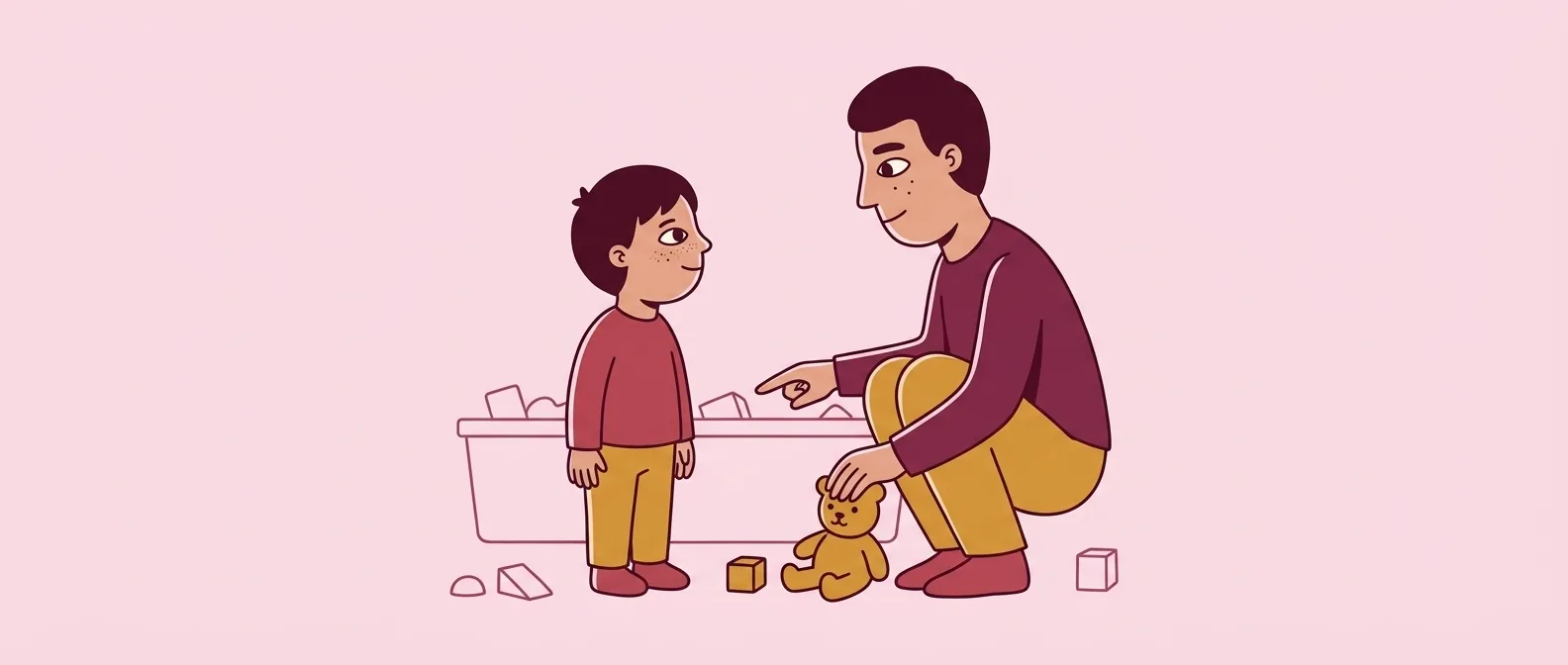
You can also invite your child to help with small tasks. They do not have to do them perfectly—the opportunity to try is what matters.
- Putting a light item into a bag.
- Putting blocks back in the box.
- Stirring ingredients with a spoon.
- Handing you a diaper or socks.
- Wiping the table with a small cloth.
- Pouring a little water with your help.
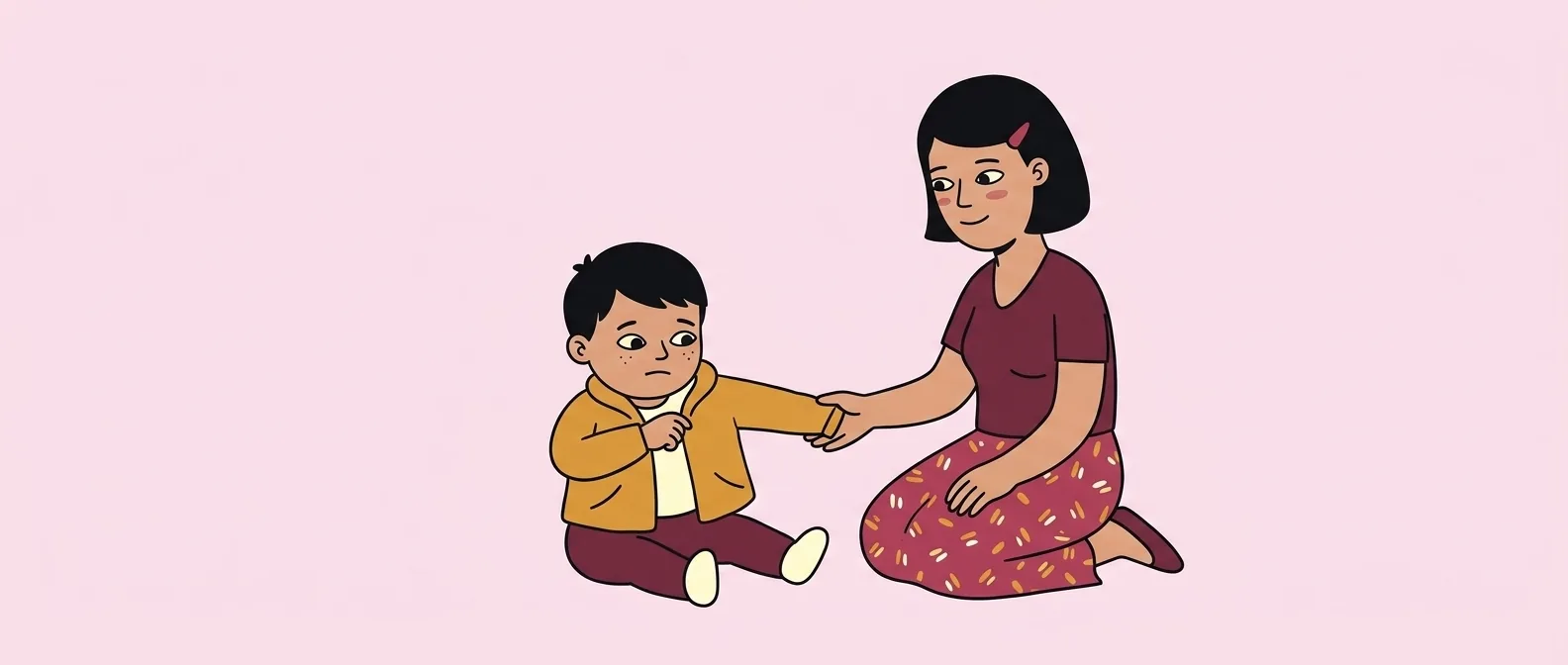
If your child gets frustrated quickly or gives up, there is no need to push. You can say, “This is hard—we’ll do it together,” and take over part of the task.
What can make protests more intense during the day?
Sometimes an angry outburst can seem as though it came out of nowhere. However, it is worth thinking back a few minutes: what happened beforehand, how long you had been out, and whether your child had a chance to rest. Young children have limited patience, especially on a demanding day.
Protests are more likely when a child:
- is hungry or tired;
- has spent a long time in noise, a store, or a crowd;
- has to suddenly stop an enjoyable activity;
- has been waiting too long;
- hears many instructions one after another;
- has no say at all in what is happening.
Changes can also be especially challenging. Your child may not want to leave the house even though they like daycare. They may protest before bath time, even though moments later they happily play in the water. The difficult part may simply be the transition from one activity to another.
How can you make a change of plans easier for your child?
Instead of saying generally, “We’re leaving in five minutes,” use something your child can see or count. Say, “Two more trips down the slide, then we’re going home,” or “After this block, we’ll put the toys in the box.”
Before the activity ends, remind them of the agreement in one sentence. The goal is not for the protest to disappear immediately, but for your child to begin understanding the repeated pattern. ⏳
Helpful phrases may sound like this:
- “We’ll finish this page, then we’ll go wash our hands.”
- “After this show, we’re turning off the screen.”
- “First the shopping, then we’ll go back to the car.”
- “One more turn on the swing, then we’ll put on our shoes.”
How should you respond when your two-year-old has an angry outburst?
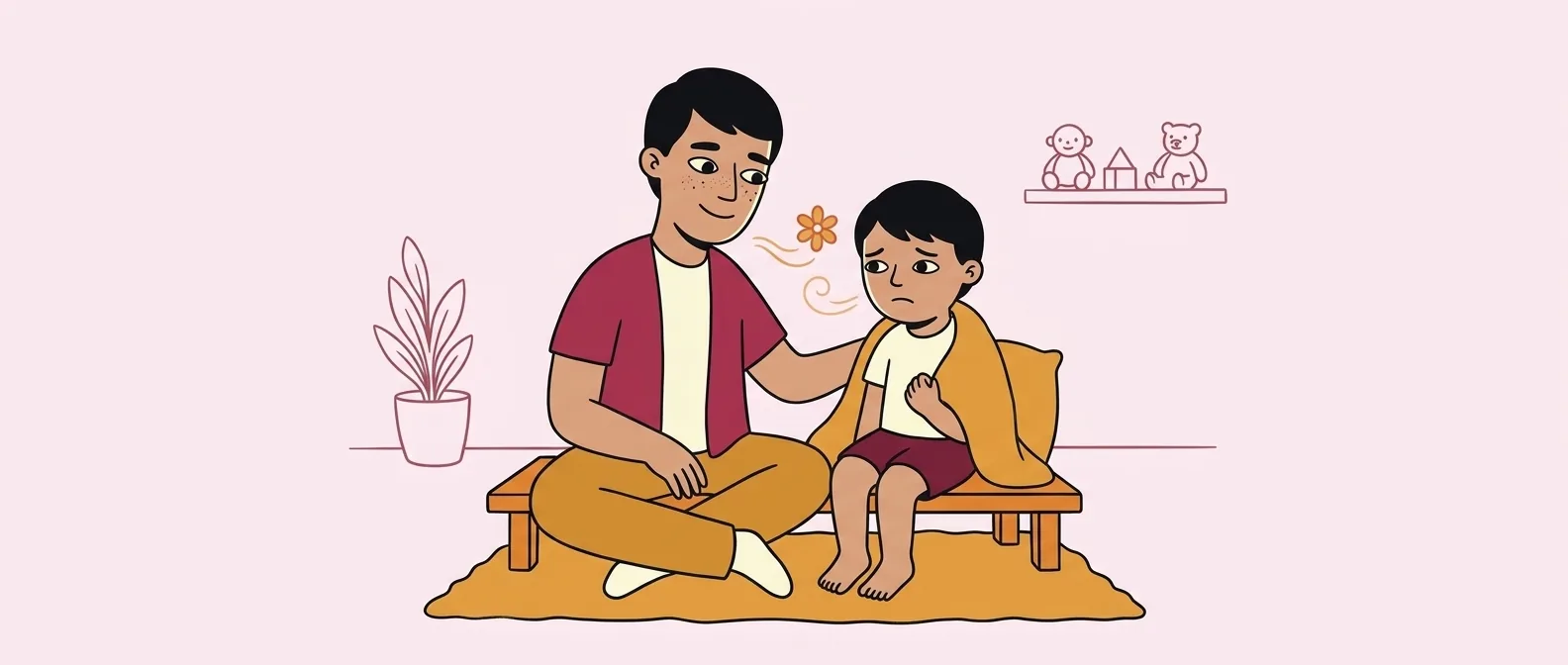
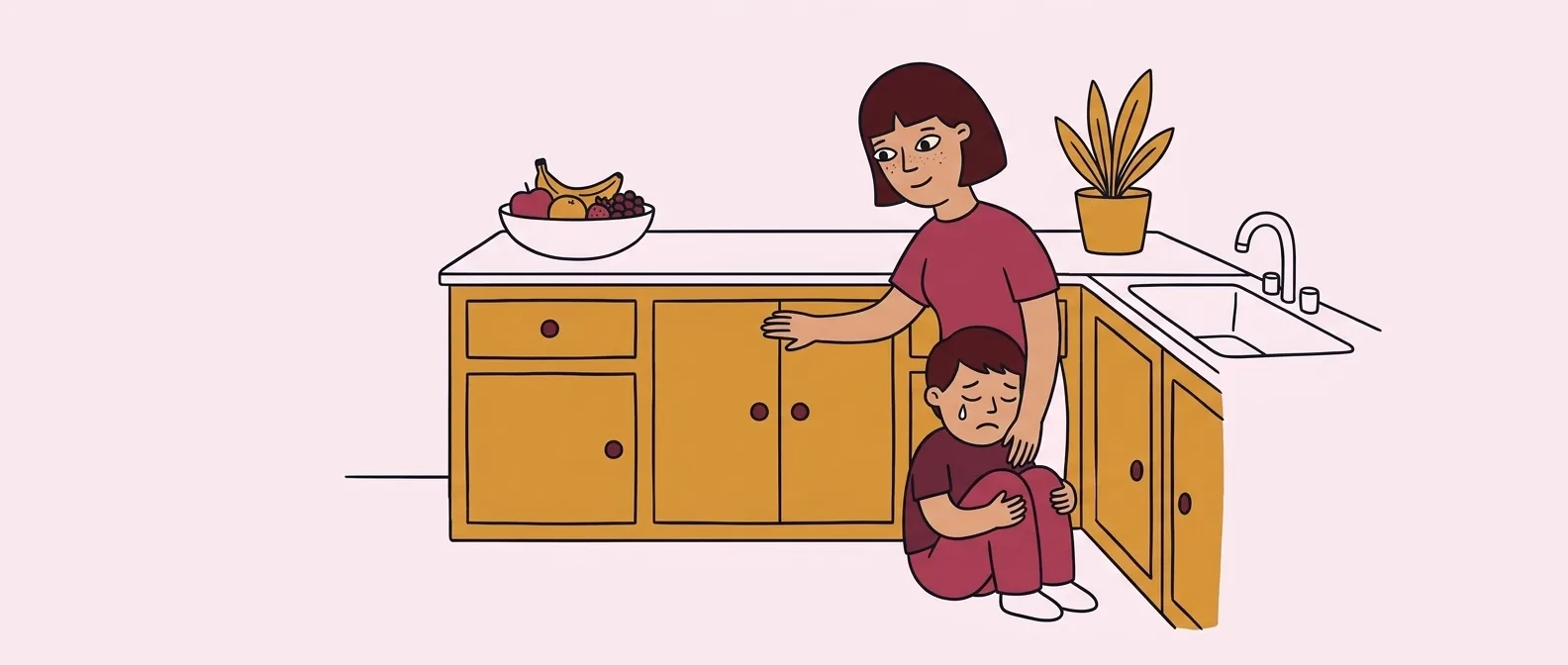
When your child is shouting, throwing themselves on the floor, or trying to hit, you do not need to persuade them with lengthy arguments. In the middle of big emotions, your little one is usually not ready to talk about rules. First, they need a safe, calm situation.
1. Keep everyone safe
Move away objects your child could hurt themselves on, and get away from streets, stairs, or other dangerous places. If your little one is hitting, biting, or kicking, stop the movement firmly but without pulling or yanking.
You can say: “I won’t let you hit. I’m stopping your hand.” Keep it short, calm, and without a lecture.
2. Use fewer words
You do not need to explain the whole situation from the beginning at that moment. The greater the tension, the easier it is usually for a child to take in a simpler message.
Try speaking more quietly and slowly:
- “I can see you’re angry.”
- “You want to stay at the playground longer.”
- “We’re leaving now.”
- “I’m right here.”
- “I won’t let you kick.”
Staying calm does not mean agreeing to everything. You can acknowledge your child’s emotion while still holding the boundary.
3. Do not change the boundary because of shouting
If the agreement was clear—for example, that you would go home after two trips down the slide—it is worth calmly following through. Giving in only because the protest is loud can make future endings even harder.
You can say: “I know you want to stay. This is hard for you. We’re going home now.” You do not have to prove that you are right or convince your child that going home will be wonderful.
4. Reconnect once they have calmed down
When the tension has eased a little, offer water, a hug, quiet time sitting beside you, or moving on to the next activity. Later, you can show your child a simpler way to express their frustration.
For example:
- “You can say, ‘I want more.’”
- “When you’re angry, you can stomp your foot.”
- “Say, ‘I don’t want to,’ instead of throwing the toy.”
- “If you want your turn, say, ‘My turn now.’”
Boundaries for a two-year-old in everyday situations
Boundaries are easier to accept when they are short and specific. Your child does not need lots of warnings or complicated explanations. It is better to say what will happen now and help them move into action.
Getting dressed, leaving the playground, and shopping
- Getting dressed: your child can decide whether to put on the left or right shoe first, or which of two prepared sweatshirts to choose. The adult’s boundary remains that you put on the necessary clothes before going out, and then you leave.
- Leaving the playground: your child can choose the final activity, such as going down the slide or spending a moment on the swing. The adult’s boundary remains the time when play ends and leaving when it is time to go home.
- Saying no to a purchase: your child can help put a chosen item from the list into the cart or decide whether to carry a small bag. The adult’s boundary remains what you are not buying. You can say: “We’re not buying sweets today. You can put the bananas in the cart or help me find the bread.”
In each of these moments, it helps to briefly name the emotion and the decision: “You want to stay longer. I understand. We’re leaving now.” A small choice does not change the boundary, but it gives your child a part in what happens next.
Meals
At mealtimes, it helps to follow a simple structure: you prepare and offer food at set times, while your child decides whether to eat and how much to eat. There is no need to count spoonfuls, promise a reward for every bite, or comment on how much they eat.
If your little one refuses, you can end the meal without anger and return to food at the next opportunity. A calm atmosphere at the table matters more than winning a single battle over broccoli.
Hitting, biting, and pushing
In these situations, your response should be quick. Protecting the other person matters more than explaining to your child why they should not do it.
Say: “Stop. I won’t let you bite.” Move your child away, block the movement, or remove the object they could use to hurt someone.
After they have calmed down, show them what they can do instead. You can practise simple phrases during play: “Give it back,” “My turn,” “I don’t want to,” “Help me.”
What is best to avoid during difficult moments?
Many reactions happen automatically, especially when you are tired or short on time. This is not about being perfect. Still, it is worth noticing a few things that usually only increase the tension.
Long explanations in the middle of an angry outburst
When your child is shouting, phrases such as, “But I told you earlier that…” usually do not help. In that moment, one or two short sentences will work better.
Instead of a long speech, you can say: “You’re angry. We’re done.”
Labels and shaming
Words such as “naughty,” “you’re manipulating me,” or “you’re doing this to upset me” do not show your child what to do differently. It is better to name the specific behaviour and stop it right away.
For example: “You threw the block. We’re putting the blocks away for a while.” This is clear information without judging your child as a person.
Threats unrelated to the situation
Taking away a show because of morning tears or threatening punishment for anger does not help your child understand the connection between their behaviour and the consequence. It is better to respond directly to what is happening.
You can:
- stop the play if it has become unsafe;
- put away an object that is being thrown;
- move your child away from the person they are hitting;
- end the activity when it is not possible to keep everyone safe.
When is it worth discussing the situation with a pediatrician or psychologist?
Big emotions, protests, and refusal are part of everyday life for many children at this age. You do not need to seek professional support simply because there are tears when leaving, an argument over clothes, or a difficult end to playtime.
However, it is worth speaking with a pediatrician or psychologist if you feel the situation consistently goes beyond what your family can manage, or if it is difficult to keep everyone safe. Such a conversation is not a judgment of the parent or a label placed on the child.
Pay particular attention if your child:
- often hurts themselves or seriously hurts others;
- has very intense reactions in many different settings;
- has ongoing, noticeable difficulties with sleep, eating, play, or everyday connection;
- finds it very difficult to communicate basic needs despite daily efforts to support them with simple words and gestures;
- experiences anxiety that significantly limits everyday activities;
- leaves the family with no energy for rest and calm day-to-day life.
It can be helpful to bring brief notes to an appointment. Write down when difficult moments happen, what comes before them, how long they last, and what helps even a little. This makes it easier to understand the situation.
Summary: fewer labels, more clarity
Your two-year-old does not have to be trying to upset you when they refuse to put on a jacket, want to climb the stairs by themselves, or cry when playtime ends. Often, they are trying to cope with a big disappointment, a change of plans, or a need for independence.
In practice, a simple sequence works well: notice the emotion, make the situation safe, set the boundary, and offer a small choice where there is room for one. Not every difficult moment will pass without protest, but calm, consistent responses help your child navigate everyday changes more easily.
If you need help organizing your situation and describing what is happening at home, you can use the BehaviorComplainer consultation form.
Sources
- American Academy of Pediatrics (AAP), “Emotional Development: 2 Year Olds”.
- Centers for Disease Control and Prevention (CDC), “Positive Parenting Tips: Toddlers (2–3 years old)”.
- ZERO TO THREE, “Helping Toddlers Develop Self-Control From 24–36 Months”.