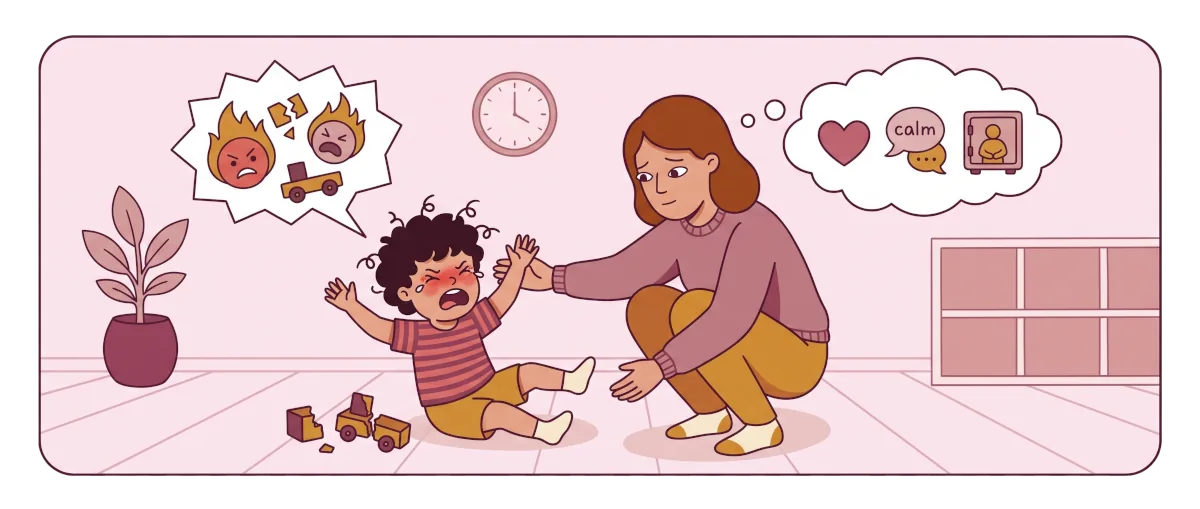
Why does your child react so strongly to something that seems small?
Does your child burst into tears because it is time to leave the playground? Do they scream when they cannot watch another episode, or throw a toy when something does not go their way? Moments like these can be exhausting, especially at the end of a long day.
A strong reaction does not automatically mean your child is being naughty or trying to upset you. Often, tension builds faster than they can manage or put into words. A young child may not yet be able to say that they are tired, disappointed, hungry, or overwhelmed.
In practice, emotional regulation begins with an adult’s presence. Children gradually learn to calm themselves because someone beside them helps them through a difficult moment calmly and without shaming them.
This does not mean giving up boundaries. You can accept your child’s anger while also stopping hitting, biting, or throwing hard objects.
In this article, you will find:
- guidance tailored to your child’s age;
- simple ways to respond to crying and anger;
- ideas for everyday situations that can reduce tension;
- signs that it may be worth speaking with a paediatrician or child psychologist.
Emotional regulation does not mean your child stops getting angry
Your child has the right to cry, protest, feel afraid, jealous, or disappointed. The goal is not to raise a child who always reacts calmly and never objects. Emotions are part of everyday life, including the difficult parts.
Emotional regulation is more about a child gradually beginning to notice what is happening inside them and learning safer ways to respond. At first, they need an adult’s help; later, they can increasingly use simple, familiar strategies on their own.
For a young child, ending playtime, being told they cannot buy something in a shop, or a change of plans can feel like a very big experience. When words and experience are still limited, emotions often come out through the body: screaming, crying, kicking, biting, or throwing things.
The emotion is acceptable, but not every behaviour is
It is helpful to separate two things:
- your child can feel angry, upset, or frustrated;
- they cannot hurt themselves, other people, or damage things.
Instead of trying to convince your child that there is no reason to be angry, you can say briefly: I can see you are very angry. I will not let you hit. This message acknowledges the emotion while setting a clear boundary.
You do not need to explain at length or negotiate in the middle of a crisis. Safety, a calm tone, and limiting anything that could hurt someone are more important first.
Your child needs your calm before they can find their own
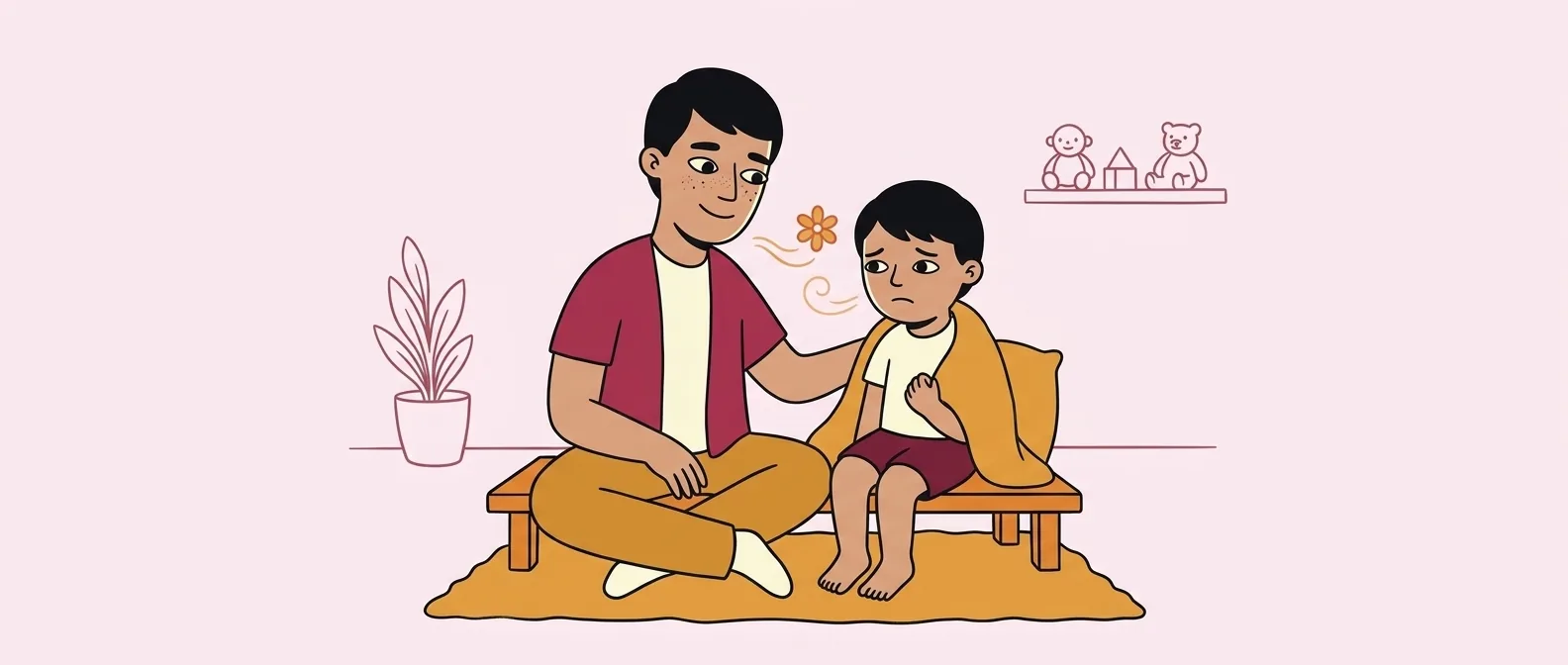
An instruction such as “calm down” is usually not enough when a child is very upset. In that moment, they may need your presence, simple words, and a little time. Sometimes a hug helps, while at other times it is better simply to sit nearby without pushing for contact.
This is not about responding perfectly every time. It is enough to return to a calm tone whenever possible and show your child that difficult emotions can be worked through without an adult shouting, shaming, or frightening them.
Supporting emotional regulation by age: a quick overview
The table below brings together the guidance described later in this article. It shows what you can expect at different stages and how to adapt support to your child’s abilities.
| Child’s age | What you can expect | What support they may need from an adult | Example of a simple exercise |
|---|---|---|---|
| 18–24 months | Emotions may appear suddenly and intensely, and it can be difficult for a child to describe their needs or stop an impulse. | Calm presence, attention to safety, and short, repeated words that name the situation and emotion. | During a calm moment, practise a simple gesture or phrase, for example saying: Help me. |
| 2–3 years | Children have more words, but may still respond by screaming, protesting, or throwing objects, especially when things do not go their way. | Stopping behaviour that could hurt someone, naming the frustration, and reminding them of one familiar alternative. | When anger builds, stomp your feet together instead of hitting. |
| 3–4 years | Children gradually understand their own emotions and those of others, and learn to connect a feeling with a specific situation. | Help naming the emotion and practising a short pause before acting. | Practise a plan: stop your hands, step away, and say: I’m angry or Help me. |
| 5–6 years | Children are more often able to say what makes them angry, worried, or disappointed, but may still need support in difficult situations. | A shared plan before a challenging event, calm presence during it, and a brief conversation once they have calmed down. | Before a difficult situation, choose one step, such as taking a break, having a drink of water, or going to an adult for help. |
Emotional regulation in children aged 18–24 months
Between 18 and 24 months, emotions often appear suddenly and very intensely. A toddler may be happily playing one moment and crying the next because they do not want to give up a toy or leave the house. At this stage, stopping an impulse independently can still be very difficult.
Children of this age are usually not yet able to describe what they are experiencing. Instead of saying they are tired or disappointed, they may scream, fall to the floor, bite, or wave their arms. This behaviour needs a response, but it is worth first considering what may have happened beforehand.
Common reasons for strong reactions include:
- hunger or thirst;
- tiredness;
- noise and too much stimulation;
- having to stop an enjoyable activity;
- difficulty waiting;
- being told no or a change of plans.
How should you respond in the moment?
At this age, short and repeated messages work best. If your child hits, calmly stop the movement, move them away from the other person, or take away an object they could use to hurt someone.
You can use a few simple words:
- I will not let you hit.
- You are angry.
- You want to keep playing.
- I’m here.
- I will help you.
Once your child has calmed down, there is no need to revisit the situation with a long conversation. One sentence is enough: It was hard to stop playing because you wanted to stay longer.
Children aged 2–3: more words, still lots of emotions
At around 25–36 months, children begin to use words more often, but this does not mean they can already use them to stop intense anger. They may know words such as angry, sad, or no, and still respond by screaming or throwing a toy.
This is also a stage of strong growing independence. Children want to decide, choose, try things, and do things their own way. When something does not work or an adult says no, frustration can rise quickly.
Parents often notice more protests around getting dressed, leaving the house, washing hands, turning off a show, or sharing toys. It is not always possible to avoid these situations, but you can help your child move through them more calmly.
First, stop the difficult behaviour
When your child is very upset, explaining may only increase their irritation. It is better to focus on safety first and name what you see.
You might say: I will not let you throw the blocks. You are very angry because building is not working out. Keep it brief, without judging, and without expecting your child to respond straight away.
When the tension has eased, return briefly to the situation. This sentence can help: Next time, you can say “help me”.
Choose one simple alternative
When emotions are strong, children do not need a long list of ideas. It is easier for them to remember one response that you practise repeatedly in similar situations.
For example, you could agree that:
- when something does not work, your child says: Help me;
- when anger builds, they can stomp their feet instead of hitting;
- when they argue over a toy, they come to you;
- when it is hard to stop an activity, they take a short break with you.
It is best to practise these solutions when your child is calm. In the middle of an outburst, remind them of just one familiar step.
Emotional regulation in children aged 3–4
Three- and four-year-olds increasingly understand that other people have feelings too. They may notice that a friend is sad, a sibling is angry, or an adult is surprised. However, they still need help connecting an emotion to a specific situation.
It is worth expanding emotional vocabulary beyond basic words such as angry and sad. Your child can gradually learn words like disappointed, jealous, nervous, embarrassed, or scared. There is no need to turn this into a lesson—ordinary everyday situations are enough.
You might say: You are disappointed because the tower fell down or You felt upset because you wanted to be first. This gives your child words they may eventually use independently.
Practise taking a short pause before acting
The goal is not to eliminate shouting or protesting completely. It is more helpful to practise a small pause between the feeling and the action. A child can learn that when their body feels very tense, they can take one simple step.
An example plan might look like this:
- Stop your hands and feet.
- Take one step away from the conflict.
- Say: I’m angry or Help me.
- Stomp your feet, jump, or hug a pillow.
- Return to the conversation when things feel calmer.
Do not expect your child to use the entire plan immediately. In a difficult moment, remind them of just one thing, for example: Stop your hands. I’m here.
Use play instead of long conversations
For many children, it is easier to talk about emotions through dolls, figures, teddy bears, or drawing. You can act out a situation where a teddy loses a game, has to give up a toy, or has to wait for their turn.
Ask a simple question: Teddy is angry. What can Teddy do now?. Your child does not need to give the perfect answer—the point is to explore possibilities calmly and without pressure.
These games will not make every difficult situation immediately happen without protest. However, they can help familiarise your child with simple words and solutions that will be easier to return to later.
How to support children aged 5–6 before, during, and after a difficult situation
Children aged 5–6 are more often able to say what they are worried about or what made them angry. However, they may still need your support with separating at preschool, losing a game, conflict with a friend, or an unexpected change of plans.
At this age, it is helpful to prepare your child for more challenging moments. This is not about convincing them that there is nothing to fear or that they should not worry. It is better to decide together what might help if tension starts to rise.
Before the situation: explain the plan and give your child a choice
A short plan helps your child feel that they know what will happen next. You can describe the event step by step and then ask what may be hardest.
Helpful phrases include:
- First, we will go into the room, then say hello, and then you will stay and play.
- If you lose, you may feel angry. You can take a break or have some water.
- If someone takes something from you, say that you do not like it. If that does not help, come to me.
It is worth asking: What might be difficult for you today? and What would you like to do then?. One child may choose talking, another movement, a quiet moment, or sitting close to an adult.
During the situation: fewer words, more calm
If emotions are very intense, there is no need to discuss the whole situation immediately. Your child first needs to feel safe and regain some balance.
You can say:
- I can see you got very angry.
- I will not let you throw things.
- We will take a short break.
- I’m here when you are ready.
- Let’s take a short walk or have some water.
If your child does not want a hug, respect that. Stay nearby, but do not force touch or conversation.
After the situation: come back to it without interrogating your child
Only once your child has calmed down is it possible to think about what happened. Instead of asking why they did it, try describing the situation and inviting them to look for a solution with you.
You might say: The change of plans was difficult for you. What might help next time?. If your child does not want to talk, return to the topic later while drawing, walking, or playing.
How to respond during a tantrum: 6 simple steps
A strong emotional outburst may happen after being told no, an argument, noise, tiredness, or suddenly having to stop an enjoyable activity. In these moments, you do not need to find the perfect phrase or an immediate solution.
The most important thing is to combine two things: a calm boundary and your presence. Your child needs to know that their emotion can exist, but behaviour that hurts others will be stopped.
1. Slow down before you respond
Take a slower breath and try to lower your voice. This is not always easy, especially when the situation lasts a long time or your child is screaming in public. Even slightly slowing your reaction can reduce tension.
You do not have to pretend that nothing is happening. It is enough to speak as calmly as possible and not respond to shouting with shouting.
2. Keep everyone safe
If your child kicks, bites, hits, or throws things, stop it straight away. Move the object away, create more distance between children, or shield the other person from being hit.
If necessary, you can briefly and gently block the movement of their hand. This is not about pulling, restraining, or prolonging physical contact.
Use a simple message: I will not let you hit or I’m taking this block away so nobody gets hurt.
3. Stay close, but do not push
Some children seek a hug when they are angry; others do not want to be touched then. You can offer a choice: Would you like a hug, or should I sit beside you?
If your child says no, do not try to persuade them. Stay within sight and give them a moment.
4. Keep your words short
At the height of an emotional outburst, long sentences rarely help. Choose one calm sentence and repeat it if needed without adding more arguments.
For example:
- You are very angry.
- This was difficult for you.
- I’m here.
- I will help you when your body feels a little calmer.
5. Name what happened
When the crying or screaming begins to lessen, you can connect the emotion with the situation. Say: You wanted to stay at the playground longer or You felt sad that your creation fell down.
This is not the moment for judgement or analysing everything. A few words that help your child understand their own experience are enough.
6. Choose one idea for next time
At the end, suggest one small strategy. It could be asking for help, stomping feet, hugging a pillow, doing a few jumps, or taking a moment to rest beside you.
There is no need to introduce several new rules at once. One repeated response is easier for your child to remember than a long list of options.
A daily routine can reduce tension
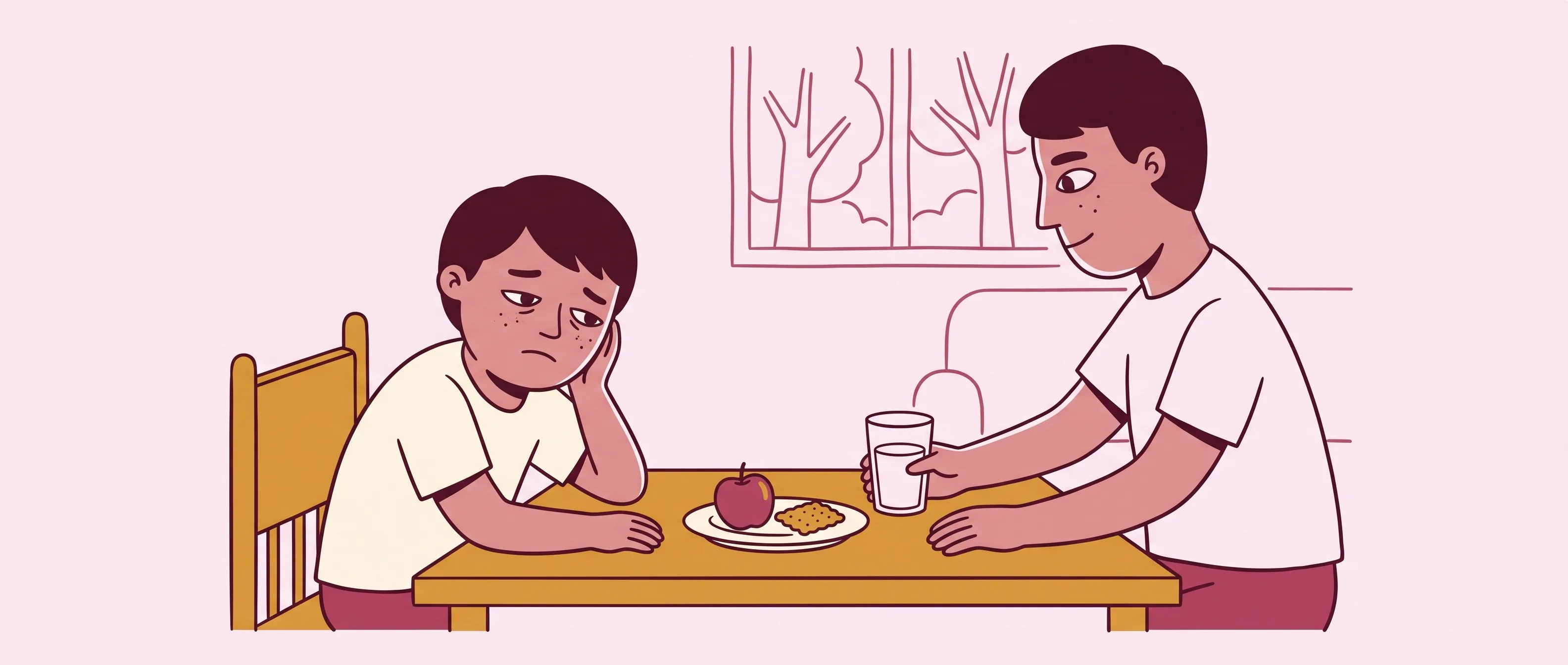
Many difficult reactions begin before tears or shouting appear. A hungry, overtired, or overstimulated child usually has less patience for waiting, changes, and being told no.
This is not about planning every day perfectly. However, it is worth noticing after which situations it is hardest for your child to stay balanced and where you can introduce a little more predictability.
Helpful basics include:
- regular meals and drinks;
- a calmer time before bed;
- daily movement;
- time for free play;
- breaks after noisy or intense events;
- short periods of closeness and an adult’s full attention.
Every child may have different difficult moments. For one, it may be returning from preschool; for another, shopping, a family gathering, a long journey, or waiting in a queue.
Make transitions between activities easier
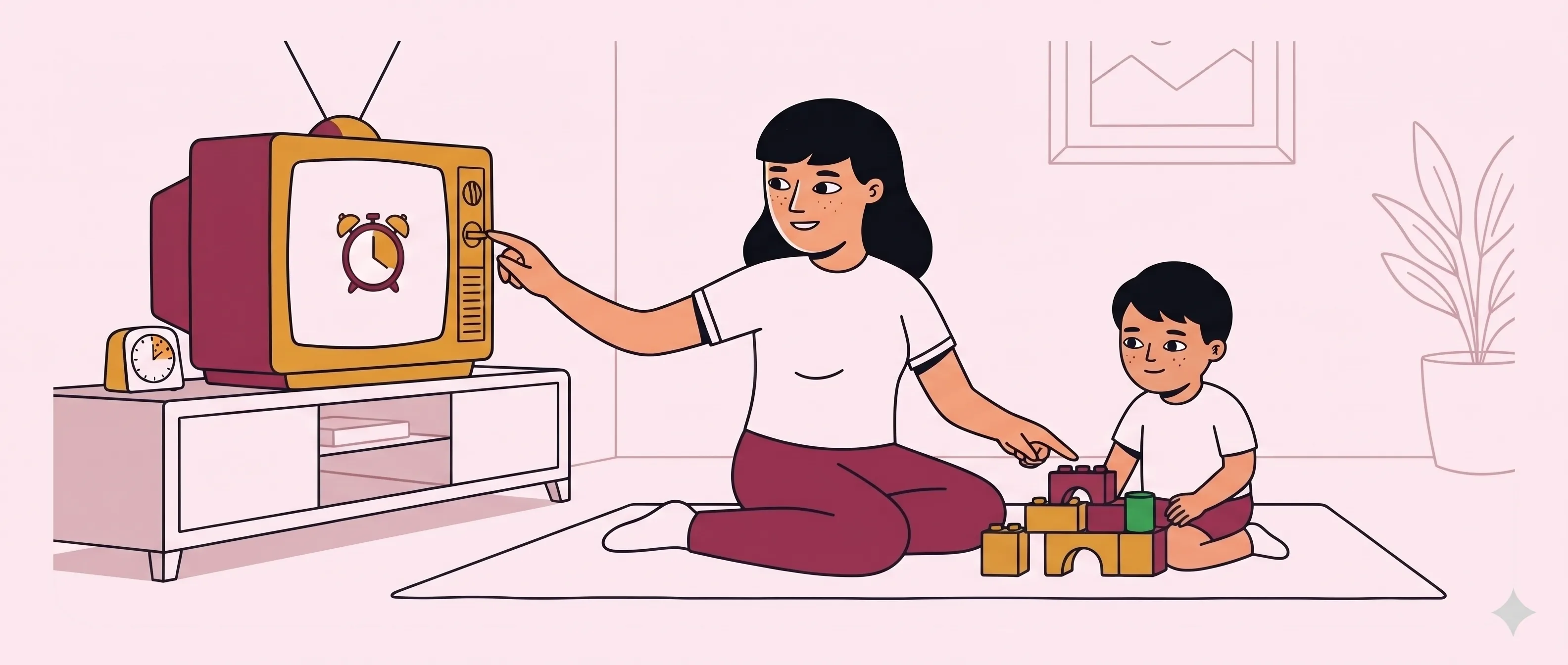
Ending playtime can be difficult even when your child knows the rules. Instead of expecting an immediate response, give advance notice: In five minutes, we will finish playing with the blocks.
A regular ritual can help too. You might put away a few things together, say goodbye to the playground, or choose one last activity before leaving.
Give your child a small choice within a decision that has already been made. For example: We are going to the bathroom. Would you like to walk like a cat or a bear?. This choice does not change the boundary, but it can make the transition easier.
Observe how your child responds to screens
For some children, screens are a very intense stimulus. It is worth noticing what happens after watching: are they more irritable, do they find it harder to stop the activity, or do they demand another video more strongly?
If you notice that certain content clearly increases tension, you can limit it and replace it with a calmer activity. Movement, conversation, play, and rest without additional sounds and images can be a helpful balance to screen time.
Simple activities that support emotional regulation
It is easiest to introduce new ways of coping with tension when your child is calm. During a strong outburst, they may not want to try anything new, even if they usually enjoy the activity.
The aim is not to get rid of anger or sadness. It is to show your child that they can experience these emotions safely.
Breathing and calming activities
For younger children, short activities involving closeness can work well, such as gentle rocking, softly massaging their hands, or listening to calming music.
For older children, you can suggest breathing games:
- breathing out like a dragon releasing a long stream of air;
- blowing out imaginary candles;
- moving a feather or light tissue with their breath alone;
- blowing bubbles and watching them float slowly away.
If your child does not want to take part, do not encourage them for too long. You can do the activity beside them and leave them the option to join.
Safe movement for big emotions
Not all tension needs quiet. Sometimes a child needs to move their body before they are ready to talk or rest.
You could try:
- jumping on pillows;
- a short obstacle course;
- dancing to music;
- shaking hands and legs;
- pretending to be animals;
- hugging a pillow tightly.
It is worth agreeing in advance where this kind of movement is safe. This way, your child hears not only what they cannot do, but also what they can do instead of hitting or throwing.
Drawing and toy scenarios
After a difficult situation, you can draw anger, sadness, or disappointment together. Do not judge the drawing or expect your child to explain exactly what they created. Interest and calm presence are enough.
Scenarios with figures can also work well. You might say: Teddy wants the same spade as Bunny. What can Teddy do?. This is a simple way to practise waiting, asking for help, and looking for solutions to conflict.
Boundaries without shaming your child
Sometimes parents worry that naming an emotion will encourage their child to push for what they want. It does not have to. You can notice the anger without changing your decision.
For example: I can see you want another episode and you are angry that I am turning it off. That is enough for today. Your child hears that they have been noticed, while the boundary still stands.
Calm consistency does not require coldness or leaving your child alone with intense tension. You can stop the behaviour while remaining available.
In a difficult moment, these approaches usually do not help:
- punishing a child for crying, anger, or fear;
- shaming your child;
- making fun of their reaction;
- long explanations;
- expecting a young child to control a strong impulse immediately.
In practice, a simple order is useful: safety, a short message, presence, and only then conversation.
When is it worth discussing these difficulties with a paediatrician or child psychologist?
Crying, protests, anger during separation, and difficulty ending play can all occur as part of a child’s everyday development. However, it is worth paying attention to how often these situations happen, how intense they are, and whether they strongly affect the whole family’s daily life.
Consider seeking advice if your child:
- regularly puts themselves or others at risk;
- often causes serious injuries through hitting, biting, head-banging, or throwing heavy objects;
- takes a very long time to return to usual activities after an outburst;
- has similarly intense reactions in many settings and with different adults;
- clearly loses skills they previously used, for example in communication, play, or connection with close family members.
It is also worth seeking support if you feel very tired or helpless, or notice that tension at home is increasing. A consultation does not determine any diagnosis—it may simply help you make sense of the situation and choose the next steps.
You can begin by speaking with a paediatrician, especially if changes in behaviour occur alongside sleep difficulties, eating difficulties, pain, or a sudden change in your child’s wellbeing. Depending on the situation, a conversation with a child psychologist may also be helpful.
Summary: what can you do today?
Supporting emotional regulation does not mean making your child stop crying, protesting, or getting angry. It means gradually helping them learn to move through difficult moments safely—with your support, clear boundaries, and consistent ways of responding.
When emotions are very intense, return to this simple pattern:
- Keep everyone safe.
- Briefly say what you see.
- Stop behaviour that could hurt someone.
- Stay close without pushing.
- Return to the conversation only once your child has calmed down.
Do not try to change everything at once. Choose one thing for the coming week: give advance warning before ending playtime, use shorter messages during a crisis, or practise one safe response to anger.
If your child’s emotions regularly overwhelm daily life or worry you, you can use the BehaviorComplainer consultation form. The form can help you organise the most important information and calmly plan your next steps.
Sources
- Centers for Disease Control and Prevention (CDC), “CDC’s Developmental Milestones”.
- Centers for Disease Control and Prevention (CDC), “Tips for Noticing and Naming Emotions”.
- American Academy of Pediatrics (AAP), “Helping Little People Manage Big Feelings”.