When one “we’re turning it off” triggers big emotions
“Just a little longer!” — and once the show is turned off, there may be tears, shouting, throwing the remote, or complete refusal to cooperate. Moments like this can be exhausting, especially at the end of the day when everyone is already running out of patience. A protest after screen time does not mean you are doing anything wrong.
For a child, a show can be more than simply watching something. It is a familiar world, enjoyable emotions, and an activity that does not require making many decisions. When the screen suddenly disappears, the child is left with disappointment and the need to move on to something completely different.
Sometimes the issue is not the show itself, but the difficulty of ending things that are enjoyable or absorbing. If similar reactions happen when leaving the playground, tidying up blocks, or ending playtime, it is worth looking at the situation more broadly. In this article, you will find practical ways to make these moments easier for your child.
Why does a child react with anger when a show is turned off?
Children cannot always quickly switch from one activity to another. Just moments ago, they were following a story, laughing, feeling suspense, or focusing intensely. Now they are expected to put the device away, put on their shoes, wash their hands, or sit down for dinner.
Adults usually know what is coming next and why something needs to end. For a child, this change may feel different: something enjoyable has just ended, and the next step does not always seem as interesting. Anger can be a sign of disappointment, rather than an attempt to “control” a parent.
A child’s reaction after watching a show is also often affected by the rest of their day. It is worth checking whether your child is:
- hungry or thirsty,
- very tired,
- overstimulated by noise or too many events,
- upset after a difficult morning or separation,
- disappointed by something that happened earlier.
Screen time can sometimes give a child a moment of rest or a break from too many sensations. Once it ends, tension that had been hidden earlier may simply come to the surface. That is why it is worth not assuming straight away that the tablet, phone, or TV is the only cause.
Is it about the screen, or difficulty with changes to the plan?
Parents often ask how to tell the difference between a typical protest after watching a show and a broader difficulty with ending activities. It can help to look at several everyday situations, not just what happens in front of a screen. You do not need to analyse every behaviour — simply notice whether there is a recurring pattern.
Consider how your child reacts when they need to:
- leave the playground and go home,
- stop building with blocks,
- pause playtime for a bath or meal,
- leave a friend’s house,
- change a previously agreed plan for the day,
- put toys away before bed.
If protests happen in many similar moments, your child may need more support with transitions. This does not mean there is anything wrong with them. They may simply need clear information about what is ending and what will happen next.
Notice whether it is easier for them when they hear a specific plan. Saying, “After this show, we’ll wash our hands and then have dinner,” can be more helpful than simply saying, “Watching time is over.” This way, your child receives not only a boundary, but also a picture of the next step.
Set expectations before turning on a show
It is hardest to set boundaries when your child is already watching and completely absorbed in the screen. It is much calmer to explain the plan beforehand, before the show really gets underway. A short message is enough: “We’re watching one episode, then we’ll turn it off and go wash up.”
Try to choose a limit you can realistically stick to. If you say one episode every time but then allow three more, it becomes harder for your child to understand when the end actually comes. Clear expectations will not remove every emotion, but they give your child a more predictable framework.
You can use a simple sequence of reminders:
- At the beginning: “Today we’re watching one episode.”
- Before the end: “The show will be ending soon.”
- Just before turning it off: “This is the last scene. Then we’re going to the bathroom.”
- After it ends: “The show is over. Now we’re moving on to the next step.”
Some children do not yet understand phrases such as “in five minutes.” In that case, it is better to refer to something they can see or hear. You might say, “When the song ends,” “After the credits,” or “When the characters get home.”
Do not leave your child with only “it’s over”
The words “it’s over” can sound like a closed door, especially when a child does not know what comes next. That is why it helps to immediately add the next part of the day. It does not need to be a big attraction — what matters is that it is simple and can begin right away.
Example phrases:
- “After the show, we’ll have some water.”
- “Now you can choose your pyjamas.”
- “After we turn it off, we’ll go to the kitchen together.”
- “The show is ending, and then we’ll read a short book.”
- “Now we’re putting the tablet away and making a snack.”
Your child does not have to accept this suggestion enthusiastically. The point is not to leave them suddenly with an empty space and the question, “Okay, but what now?”
A step-by-step script for ending a show
- Before turning it on: “We’re watching this episode. After it, we’ll turn off the screen and wash our hands before dinner.”
- As the end approaches: “There is one last scene left. Then we’ll turn off the show and go to the bathroom.”
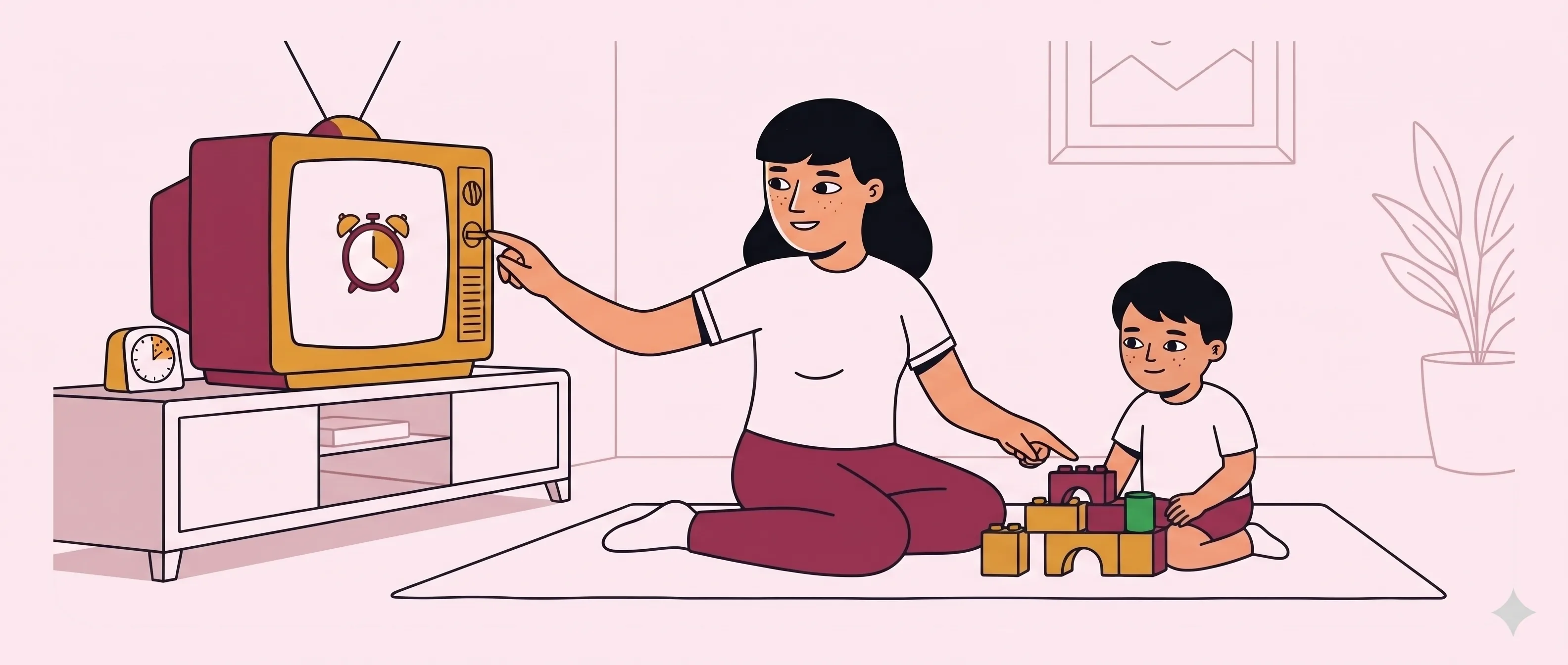
- When turning it off: “The show has ended. I’m turning off the screen.” If possible, your child can press the button with you.
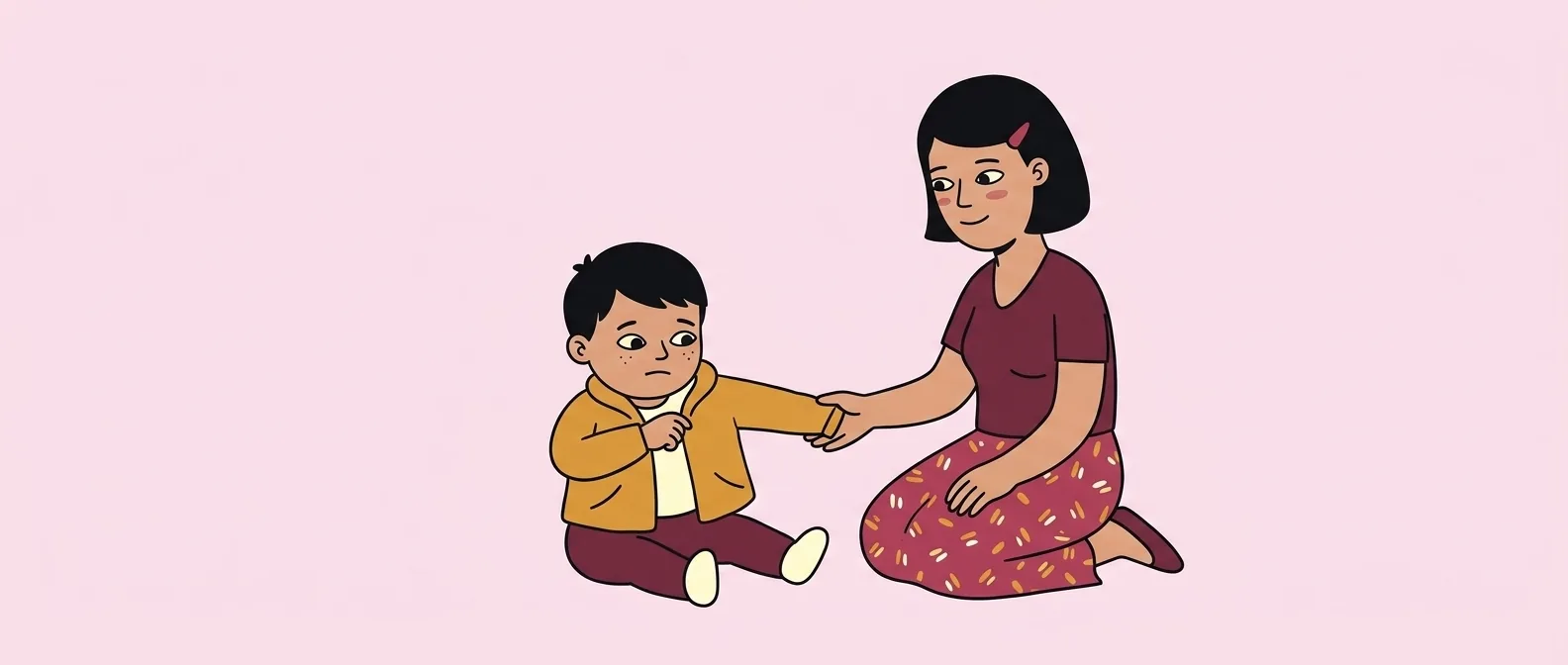
- When there is a protest: “I can see you want to keep watching. It’s hard to stop. We’re not turning on another episode today. I’m here with you.”
- At the next step: “Now you can choose: shall we go to the bathroom together, or will you get your pyjamas first?” Offer a choice about how to make the transition, not whether the show will be turned back on.
When a timer or warning does not help
A timer and a warning can help structure the situation, but your child may still protest. In that moment, adding lots of extra warnings or renegotiating the agreed boundary usually does not help. Briefly remind them of the agreement: “The timer went off, and the show is over. I can see you’re angry.” Then support a calm transition: stay close, put the remote out of reach, and return to one prepared activity.
If this approach does not make endings easier, try changing the type of warning rather than the boundary itself. Instead of a time-based reminder, refer to the end of the episode, the credits, or a regular ritual for saying goodbye to the characters. The goal is not to avoid protests every time, but to create a more predictable ending and a calm adult response.
How to make the end of a show easier: simple tools
There is no single solution that works for every child. One child may benefit from a timer, another from a consistent sequence of events, and another from turning off the device together. It is worth choosing one or two methods and trying them for a few days, rather than changing everything at once.
A timer or alarm
A timer can be helpful if your child knows about it from the beginning. It should not suddenly appear as a “signal that the show is being taken away.” It is better to say beforehand: “When we hear the sound, we’ll finish watching and move on to dinner.”
For some children, being able to press the button together with a parent works well. This does not mean the child decides the limit. However, it gives them a small part in the ending itself, which can sometimes reduce tension.
A simple visual schedule
If your child responds well to what they can see, prepare a sheet of paper with a few pictures. These can be simple drawings, printed symbols, or photos of everyday activities at home. It does not have to look perfect — a clear sequence is what matters.
An example schedule could look like this:
- show,
- turning off the screen,
- toilet or handwashing,
- snack or dinner,
- playtime, bath time, or an evening routine.
Return to this sheet before turning on the show and remind your child of it near the end. Instead of giving a long explanation, you can say, “Look, now we’re moving on to the next picture.”
A consistent ending ritual
A short ritual that looks similar every time can also help. You might say goodbye to the characters, turn off the screen together, put the remote in one place, and move on to the next activity. Over time, this routine becomes familiar, even if it is still not your child’s favourite moment.
Do not make it too complicated. The ritual should make the transition easier, not create another series of steps to argue about. Two or three repeatable actions are enough.
What should you say when your child is already angry?
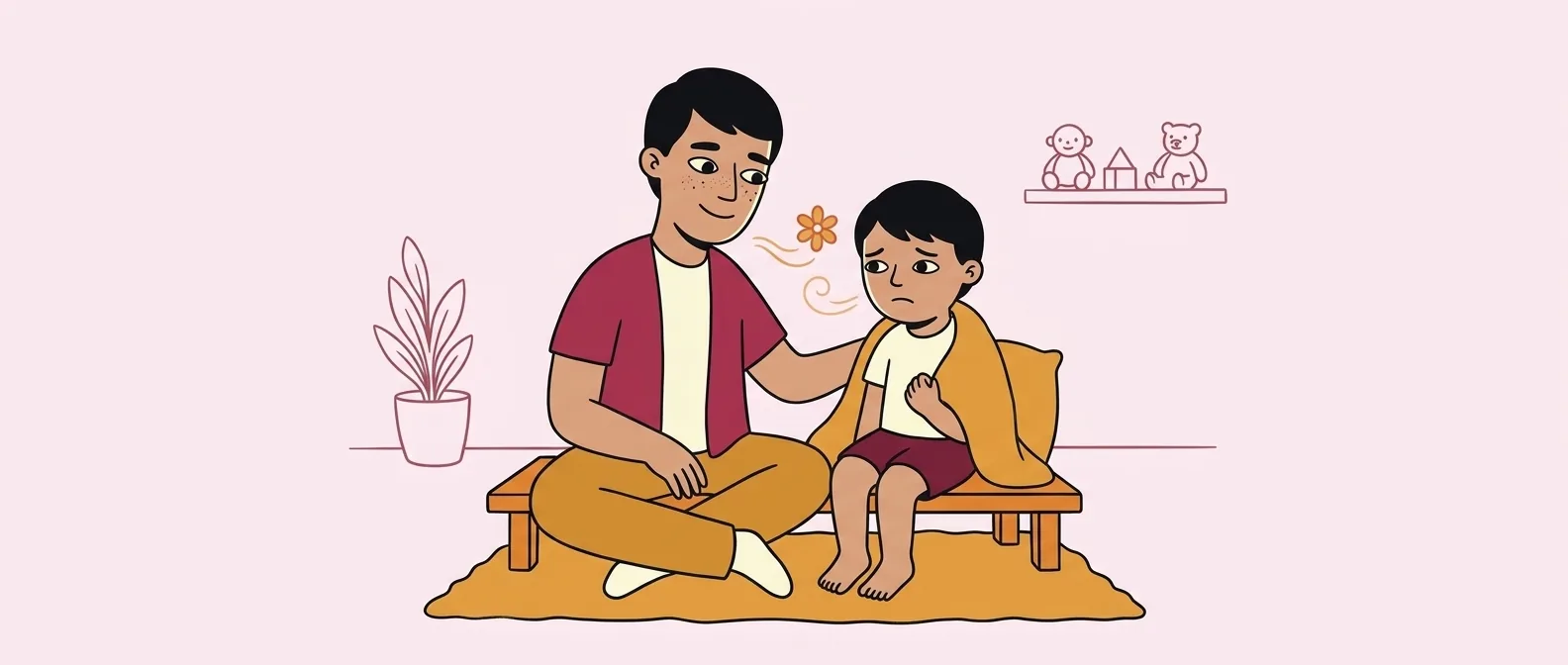
When a child is crying or shouting, they usually do not need a lecture about screen-time rules. During big emotions, it is difficult to listen to long explanations. It is better to use a few simple sentences and speak in a calm tone.
You can say:
- “I can see you’re very angry.”
- “You wanted to keep watching.”
- “It’s hard to stop doing something fun.”
- “The show is already over for today.”
- “I’m here with you.”
- “I won’t let you throw the remote.”
- “You can be angry, but I’m not going to turn on another episode.”
Acknowledging emotions does not mean giving up the boundary. You can accept your child’s anger while still keeping the decision to end screen time. These are two different messages: “I understand that this is hard for you” and “The screen is off for today.”
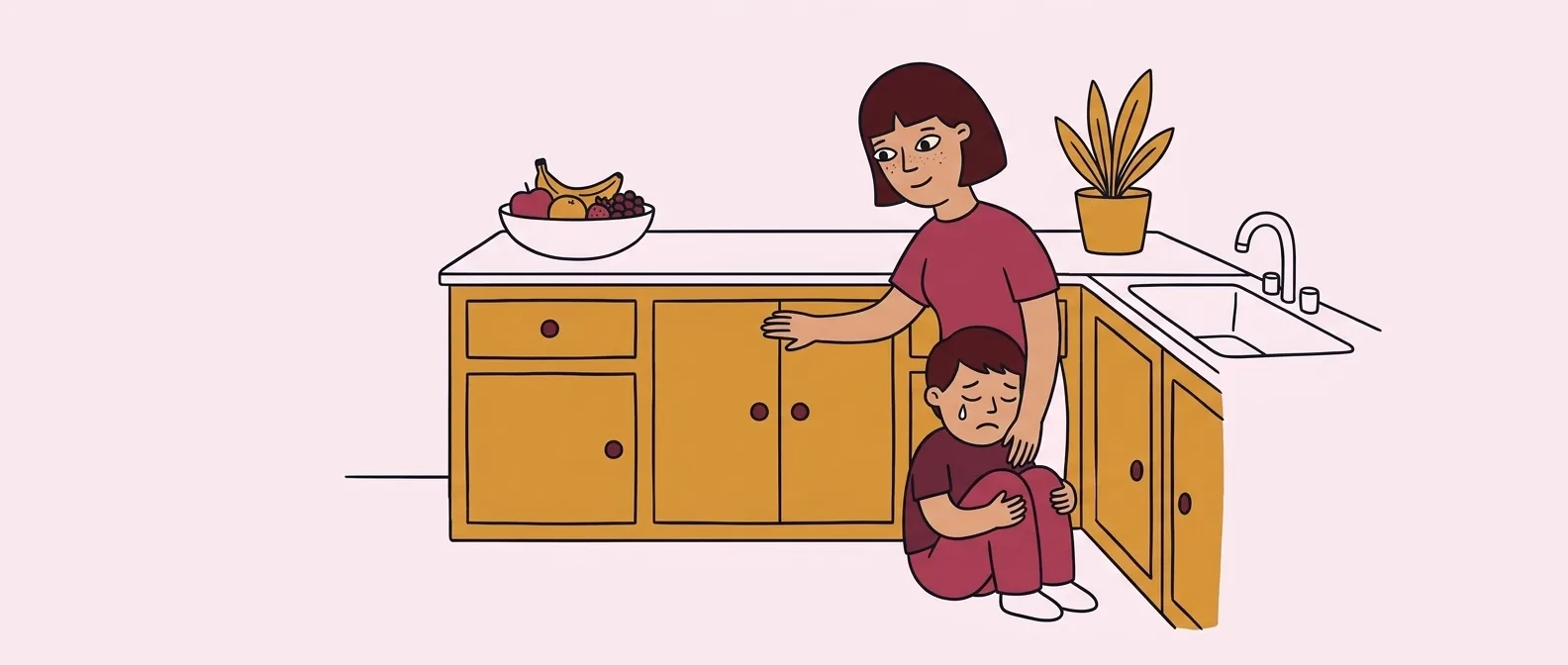
If your child hits, kicks, or throws objects, focus on safety first. Move away things that could be damaged, move siblings away, and keep a safe distance. Say briefly: “I won’t let you hit,” or “I’m putting the remote away so no one gets hurt.”
You do not need to demand an apology in the middle of an angry outburst. First, your child needs a chance to come down from those emotions. You can return to what happened later, when the situation is calmer.
What is best to avoid after turning off the screen?
One common instinct is to turn on another show just to stop the screaming. This may bring relief in the moment, but next time your child may try even harder to get the screen back through protesting. This is not about being perfectly consistent, but about having boundaries that are as clear as possible.
It is also worth avoiding phrases such as, “You’re overreacting,” “It’s only a show,” or “Big kids don’t act like that.” Your child’s disappointment is real in that moment, even if it seems small to an adult. Shaming usually does not help them calm down more quickly.
You also do not need to overwhelm your child with more and more suggestions right away. When you hear, “I’m bored!”, you can offer one specific thing and stay nearby for a while. Too many options at once may only increase frustration.
If you make an exception and change the earlier plan, name it calmly. You might say: “Today, I’m choosing to allow one more short episode, but tomorrow we’ll go back to one.” This helps your child understand that the decision is not caused by screaming, but by the situation and the parent’s choice.
What should you plan right after a show?
The transition away from a screen is usually easier when the next activity is ready and specific. Instead of saying, “Find something to do,” prepare a simple suggestion. It is helpful if it does not involve a long wait or a lot of effort.
For example, you could choose:
- making a drink or snack together,
- a few minutes of playing with blocks at the table,
- a short trip outside the house,
- stretching, jumping, or dancing to one song,
- doing a puzzle together with you,
- a cuddle and a short conversation about the show.
After fast-paced or highly emotional content, your child may not feel like immediately sitting quietly with a task. Sometimes movement will work better than an activity that requires concentration. At other times, your child may need quiet, closeness, or a moment under a blanket.
A short way of “closing” the viewing experience can be a good idea. Ask, “What was the funniest part?” or “Which character did you like best?” This does not extend screen time, but it gives your child a moment to say goodbye to the story.
How can you build calmer endings in everyday life?
Do not expect one warning or one timer to solve every difficult situation immediately. Your child is still learning that enjoyable things can end and that their parent remains close. Consistency is usually more important than carrying out every step perfectly.
It can be helpful to observe for a few days when protests are strongest. Briefly note down:
- what time your child was watching,
- what they were watching,
- whether they had eaten recently,
- whether they had experienced a lot of stimulation beforehand,
- whether they knew the plan for ending,
- what helped them return to calm.
This kind of observation may reveal small things that make a difference. Perhaps it is harder after shows watched right before bedtime. Or maybe the biggest protest happens when screen time is replacing rest after a busy day.
When is it worth seeking advice?
A single outburst after a show does not have to mean there is a more serious problem. Children have days when they are more tired, sensitive, or less ready for change. At these times, a calm boundary, a simple plan, and a parent’s presence may be enough support.
However, it is worth speaking with a paediatrician or child psychologist if the difficulties are very frequent and clearly affect everyday life. This is especially important if there are significant problems with sleep, eating, functioning at home or preschool, or if the behaviour creates a risk for the child or others.
Consultation can also be helpful when anger appears during most transitions throughout the day and strategies at home do not bring clear relief. The aim is not to label your child, but to calmly understand the situation and choose the next steps.
Summary
Anger after turning off a show can be difficult, but it does not have to mean that the screen is the only problem. Your child may need time to transition, a clear plan, and an adult who can hold the boundary without shaming them. You can say both: “I can see this is hard for you” and “The show is over for today.”
The most helpful everyday steps are simple:
- setting a limit before turning on the screen,
- giving a clear, understandable warning before the end,
- explaining what will happen next,
- having a consistent turn-off ritual,
- using calm, brief phrases during a protest,
- offering a moment of closeness, movement, or rest after the show.
If you would like to bring more structure to your family’s everyday situations around screens and activity transitions, you can describe them in the consultation form.
Sources
- American Academy of Pediatrics (AAP), “Screen Time & Temper Tantrums: Helpful Tips for Parents”.
- American Academy of Pediatrics (AAP), “Kids & Screen Time: 5 C’s Questions for Toddlers & Preschoolers”.
- Centers for Disease Control and Prevention (CDC), “Tips for Building Structure”.