“Why are they doing this?” — a question that comes up in difficult moments
Shouting in a shop, throwing food, hitting a sibling, or suddenly refusing to get dressed can make a day feel overwhelming. In that moment, it is easy to think that your child is doing it deliberately or “just to be difficult”. Often, though, this behaviour reflects a struggle your child does not yet know how to handle in another way.
Instead of focusing only on the question: “How do I stop this?”, try asking yourself for a moment: “What is my child trying to show me right now?”. Perhaps they need your attention, want to keep playing with a favourite toy, or are struggling with a task that feels too difficult. This does not excuse hitting, throwing, or shouting, but it can help you choose a calmer response.
Behaviour is also influenced by what is happening around your child. They may be hungry, overtired, overwhelmed by noise, irritated by uncomfortable clothing, or caught off guard by a change of plans. The same protest in the morning may mean something very different from a similar reaction after a whole day away from home.
In this article, you will find three common reasons for challenging behaviour, as well as two areas worth checking before drawing conclusions:
- a need for connection with an adult;
- a desire to get something, continue an activity, or have some influence over the situation;
- an attempt to avoid a difficult task;
- sensory overload;
- discomfort, tiredness, or other unmet needs.
Instead of labels: describe what actually happened
When a situation keeps happening, words such as “demanding”, “manipulative”, or “naughty” can come automatically. The problem is that they do not tell you what to do differently next time. It is more helpful to set judgement aside for a moment and look at the facts.
Instead of writing, “they behaved terribly”, you could note: “they shouted when the cartoon was turned off” or “they threw a block when I asked them to tidy up”. This kind of description does not mean accepting challenging behaviour. It does, however, give you a chance to see what triggers it and what happens immediately afterwards.
A young child is still learning how to wait, lose, finish enjoyable activities, and talk about big feelings. They may not yet be able to say: “This is too hard for me”, “I want a little longer”, or “I need help”. Shouting, crying, or refusing may then become their simplest way of responding.
It is worth remembering that one behaviour does not always have one meaning. Your child may protest about getting dressed because they want to continue playing, but the next day it may be because they are tired or the label in their top is bothering them. This is why calm observation is more useful than a quick conclusion.
1. Your child may be seeking attention and closeness
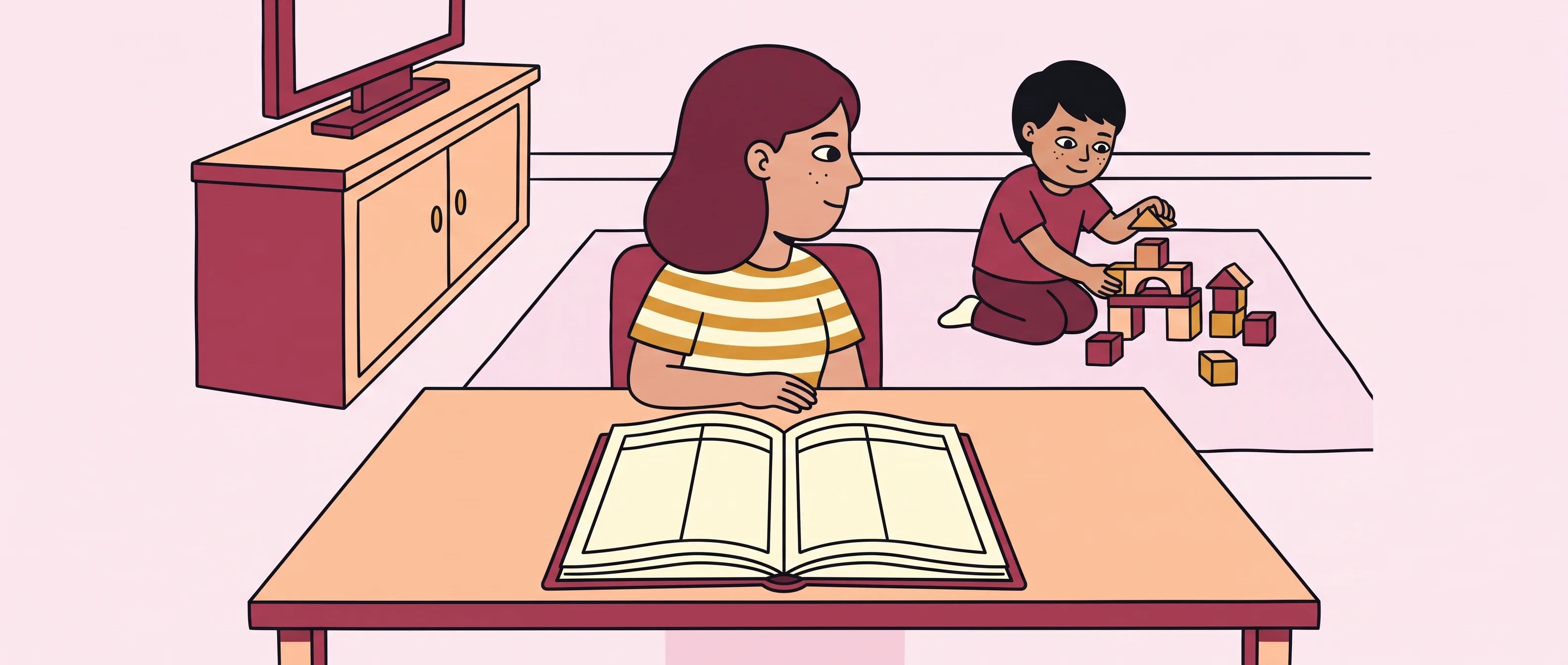
If your child starts talking loudly, pokes a sibling, climbs on furniture, or interrupts your conversation exactly when you are busy, they may be trying to reconnect with you. It does not necessarily mean they are “making a scene”. Your attention matters deeply to your child, even if they are trying to get it in an inconvenient way.
Look at what happens after this behaviour. Do you put down your phone, begin explaining at length, look at your child, or start talking with them? If so, your child may notice a simple pattern: intense behaviour quickly gets an adult’s attention.
This does not mean you should ignore your child. It is often more helpful to combine clear boundaries with short moments of genuine attention before a problem appears. Your child also needs a simple way to ask for connection without shouting or provoking others.
You could try introducing:
- 5–10 minutes of play together after getting home;
- a brief conversation before you start cooking or working;
- looking at a drawing together before answering the phone;
- a clear heads-up: “I’m finishing this message, and then I’ll be with you for five minutes.”
During calm moments, practise short phrases too: “Play with me”, “Look”, “Come with me”, or “I need help”. Do not expect your child to use them straight away in every difficult moment. First, they need to hear and practise many times that this approach really works.
2. Your child may want something or want to extend an enjoyable activity
Protesting when a cartoon is turned off, playtime at the playground ends, or another snack is refused is very common. Your child may be trying to regain access to something that has just ended: screen time, sweets, a toy, movement, or playing with others. To an adult, “five more minutes” may sound clear, but waiting can be genuinely difficult for a younger child.
Notice what brings your child relief after they protest. If the shouting stops when the cartoon is turned back on or leaving the playground is delayed, it is worth considering whether extending the activity may be reinforcing this pattern. This is not about assigning bad intentions to your child—it is about noticing what they may be learning in these situations.
Clear rules and advance warnings that are repeated in a similar way can help. They mean that the ending does not come completely out of the blue. Not every situation will be calm, but predictability often gives a child a greater sense of security.
You can use a few simple approaches:
- give advance notice: “We’re leaving in five minutes.”;
- remind them nearer the end: “One more go on the slide.”;
- offer a limited choice: “Would you like to turn the cartoon off yourself, or shall I do it?”;
- use a timer or alarm if your child responds well to that kind of signal;
- practise phrases such as: “I want more”, “Can I have it later?”, “One more minute”.
The boundary can still stay the same: the cartoon ends, and it is time to leave the playground. At the same time, your child can be supported through their disappointment. A brief, empathetic response—for example, “I can see you want to stay. It’s hard to stop playing. We’re leaving now.”—is usually enough.
3. Your child may be trying to avoid a difficult task
Refusing to cooperate does not always mean laziness or a lack of willingness. Sometimes a child is trying to push away something that feels too difficult, unclear, tiring, or simply unpleasant. They may say “no”, walk away, delay following an instruction, cry, or protest strongly.
Consider whether the difficulty usually appears before particular situations. It may be tidying up, getting dressed, brushing teeth, sitting at the table, or a task that requires concentration. If protests regularly begin just before such a moment, it is worth checking whether the expectation is too much for that day or stage of development.
Helpful questions include:
- Does my child know exactly what they need to do?
- Is the instruction short and specific?
- Can the task be divided into smaller steps?
- Is my child hungry, tired, or irritable?
- Are there too many distractions in the room?
If, after a strong protest, the task disappears or an adult does it for the child, the child may gradually start using this strategy more often. This does not have to be planned behaviour. It may simply be a quick way to avoid something that feels impossible in that moment.
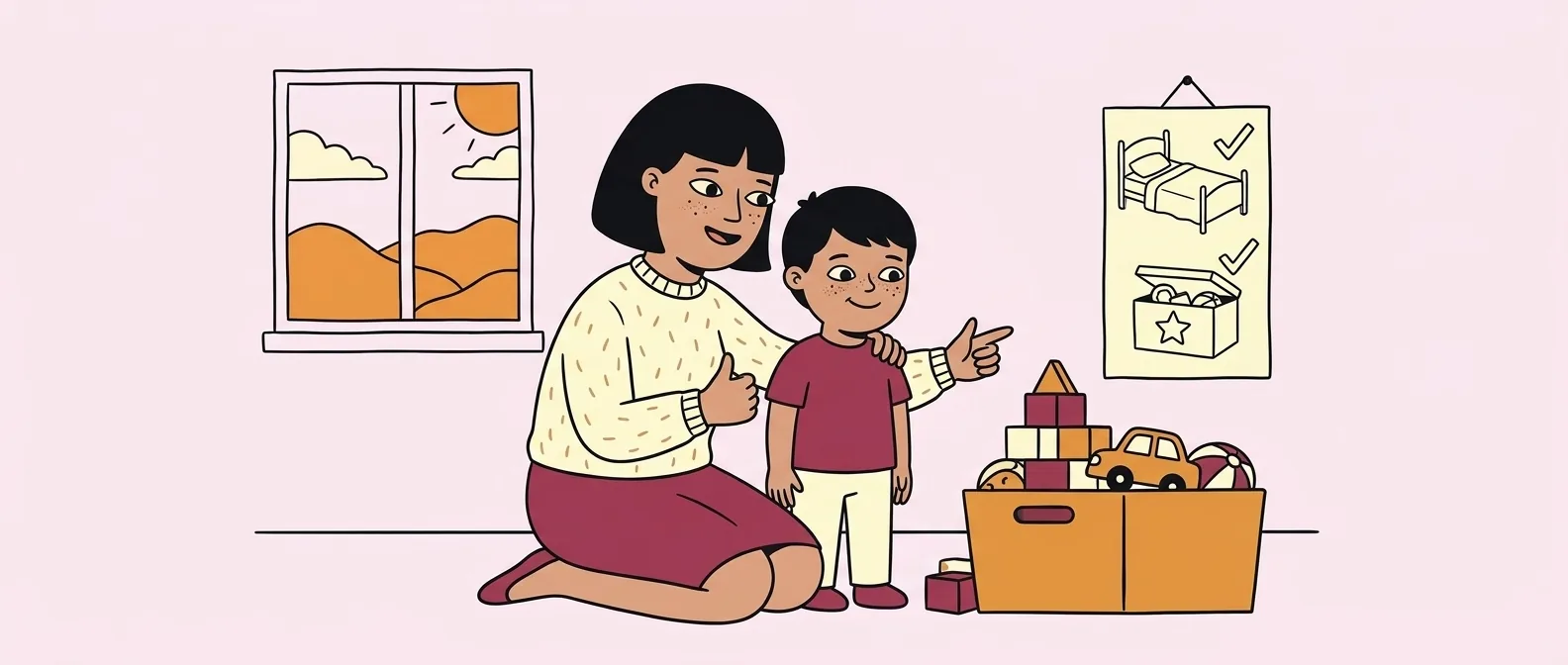
Try lowering the barrier to getting started. Instead of saying, “Tidy your whole room”, say: “Let’s put three blocks in the box together.” Once your child has started, it may be easier to add another small step or take a short break.
Sensory overload: when everything feels like too much
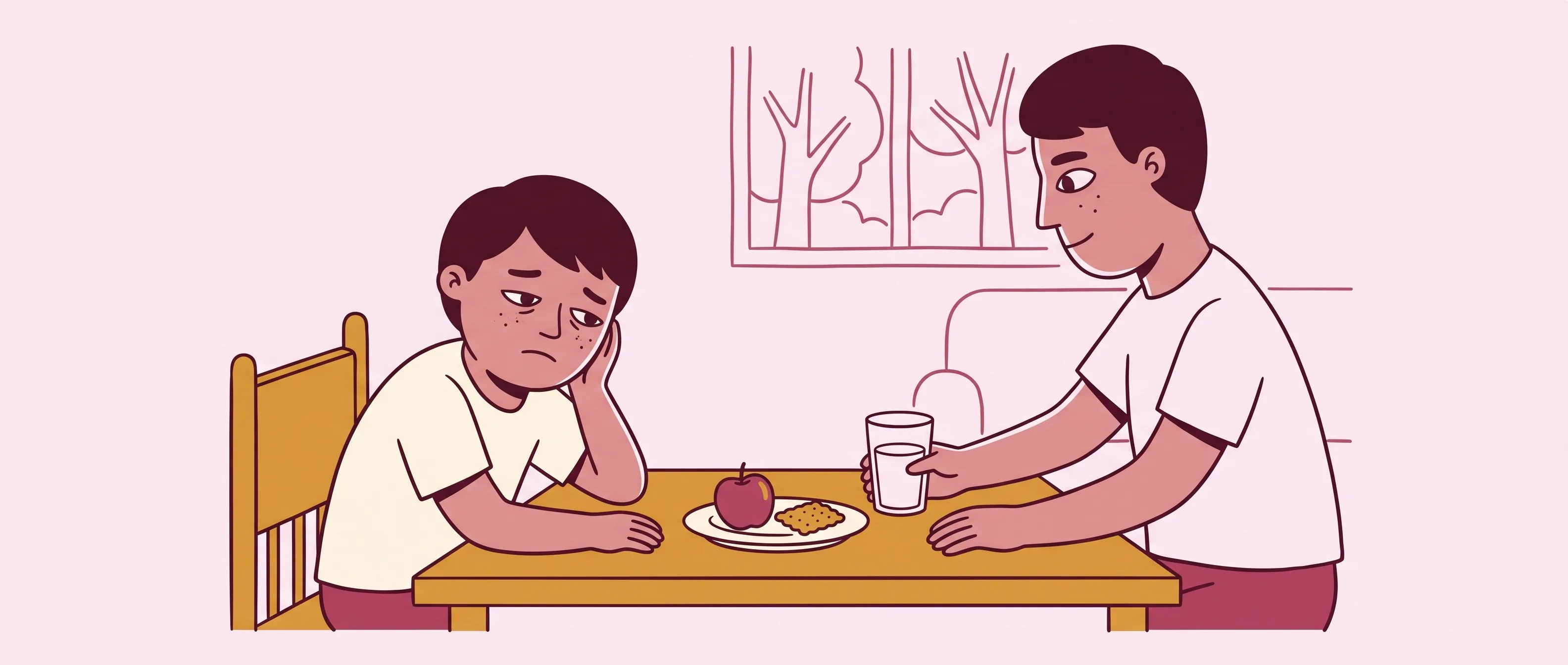
Not every outburst is related to refusing something or wanting to get something. Sometimes a child is simply tired from too many sounds, people, lights, touches, and changes. In a shop, at a birthday party, in a crowded place, or after a busy day, tension can build quickly.
Overload can look different from one child to another. One child may cry and seek a cuddle, while another may become irritable, overexcited, or try to escape to another room. You may also notice difficulty following a simple instruction, covering their ears, throwing things, or suddenly refusing an activity that did not previously cause any objection.
Before drawing conclusions, check a few basics:
- was the day especially busy or intense;
- has your child had time for movement and rest;
- are they hungry, thirsty, or overtired;
- is there a lot of noise, people, or rushing around in the environment;
- can they move to a quieter place for a while.
This does not mean every protest is caused by overload. Sometimes your child genuinely does not want to stop playing or disagrees with a boundary. Still, it is worth noticing whether challenging reactions happen more often in noise, after a long day, or when there are lots of changes.
You can start with small adjustments: make the environment quieter, offer water, step aside for a moment, let your child move their body, or warn them about the next part of the day. A regular rhythm and opportunities to pause will not solve everything, but they often make it easier for a child to cope with tension.
Discomfort and needs your child cannot yet name
Your child may not always be able to say: “My tummy hurts”, “I’m too hot”, “I want a cuddle”, or “I don’t understand what I’m supposed to do”. Instead, they may cry, push away, throw objects, or refuse to cooperate. This is a signal to pause and check their basic needs.
Sometimes the cause is very simple: lack of sleep, hunger, thirst, illness, or uncomfortable clothes. At other times, a bigger change matters, such as starting a new nursery or school, the arrival of a sibling, being apart from a parent, or a different daily routine. Your child may then need more closeness, predictability, or help adjusting to the change.
It is worth noticing whether challenging behaviour appears more often after:
- coming home from nursery or school;
- a long journey or shopping trip;
- a change in the daily plan;
- the end of an enjoyable activity;
- a poor night’s sleep;
- a situation your child clearly does not understand.
If you notice a sudden, marked change in behaviour, suspect your child is in pain, or the difficulties involve sleep, eating, or everyday functioning, contact your paediatrician. If the problem continues, happens frequently, or significantly affects family life, a consultation with a child psychologist may also be helpful.
How can you spot a repeating pattern?
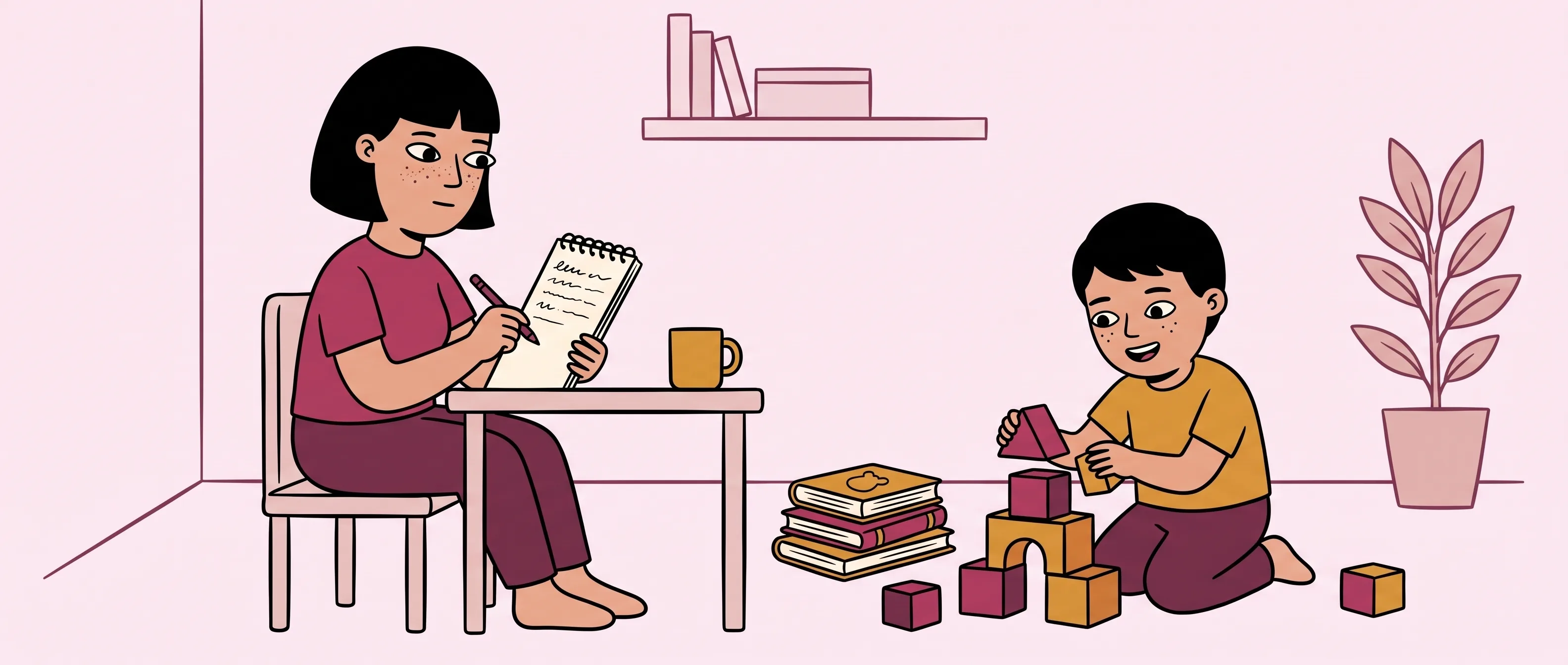
You do not need to know immediately why your child shouts, hits, or refuses. To begin with, it is enough to make very brief notes for a few days. Write down the situation in simple language, without judging yourself or your child.
For each more difficult moment, note three elements:
- What happened beforehand?
The time of day, location, noise, the end of play, an instruction, a change of plan, hunger, tiredness, or the presence of other people.
- What exactly did your child do?
For example: “shouted for three minutes”, “kicked the chair”, “ran away and hid under the table”, or “threw the remote control”.
- What happened afterwards?
Did they get more attention, screen time, a snack, a break, help, or the chance to get away from the task?
A sample note might look like this: “5:30 pm, after coming home from nursery. I asked my child to turn off the cartoon. They shouted, threw the remote control, and the cartoon was turned back on for a little longer.” This record is not meant to find someone to blame. It is meant to help you notice what you could change in a similar situation next time.
After a few days, you may notice that protests happen more often when play is ending, in the late afternoon, or during tasks that require concentration. You may also find that, in these moments, your child needs a shorter instruction, a chance to rest, more advance notice, or help getting started.
How can you test a hypothesis about the reason for behaviour?
A hypothesis is not a diagnosis or a certain answer to why your child did something. It is a working assumption worth checking in several similar situations. An ABC diary: how to observe your child’s behaviour can help—record what happened before the behaviour, exactly what your child did, and what happened afterwards.
Imagine that your child throws a toy. Throwing it alone does not yet tell you what caused it. Pay attention to the context and to what changes the situation:
- Possible explanation: your child is seeking connection. Check whether they throw things more often when you are talking on the phone, looking after a sibling, or absorbed in something else. Also observe whether, after your reaction, your child looks at you, comes closer, or repeats the behaviour.
- Possible explanation: they want to get something back or influence the situation. Notice whether throwing happens after a toy is taken away, another item is refused, or an activity ends. It is also important to see whether the protest eases when your child regains access to what they wanted.
- Possible explanation: they are trying to avoid something difficult. Check whether your child throws a toy immediately after being asked to tidy up, share it, or follow another instruction. Notice whether, after throwing, the task is postponed, changed, or taken over by an adult.
- Possible explanation: they are overwhelmed or tired. Look at whether similar situations happen more often after a noisy day, in a crowd, towards the end of the day, or when your child struggles to follow even simple requests. Check whether a quieter place, water, rest, or fewer sensory demands change how the situation unfolds.
One observation is usually not enough. Compare several records and look for recurring elements. If different patterns appear in different situations, throwing a toy may serve a different function depending on the day and circumstances.
What should you do when your child shouts, hits, throws, or runs away?
In the heat of the moment, you do not need to analyse the cause straight away. First, make sure everyone is safe—your child, other people, and the surroundings. There will be time for conversation and learning a different way of coping later.
1. Make the situation safe
Move heavy or hard objects away, create more distance from siblings, and reduce the number of people around. If you can, move to a calmer place or ask another adult for help. Fewer sensory demands often make it easier for a child to regain balance.
Physically stopping a child only makes sense when there is an immediate risk that someone will be hurt or that the child will run into a dangerous place. It should last only as long as is necessary for safety. This is not about punishment, wrestling, or showing who is in control.
2. State the boundary briefly
When emotions are intense, long explanations usually do not get through. A calm, simple message spoken in a low voice is enough. You might say:
- “I won’t let you hit.”
- “I won’t let you throw things at people.”
- “I’m going to stop this so everyone stays safe.”
- “I’m here. I’ll help you calm down.”
The boundary can remain the same even when the reasons for the behaviour are different. However, a child disappointed that playtime has ended needs different support from a child exhausted by noise or a difficult task.
3. Use fewer words and reduce extra demands
When tension is high, it is not the time for a lecture, questioning, or negotiating. Ask fewer questions, make the environment quieter, and give your child a moment. If possible, do not shame them in front of other people.
Avoid threats, shouting, smacking, and long lectures. These responses can raise the tension even further. In that moment, calming the situation matters more than quickly getting an apology or full understanding.
4. Return to it when things are calmer
When your child is speaking more quietly, breathing more freely, and no longer trying to hurt anyone, briefly name what happened. You might say: “You were angry because playtime was ending. You threw a block.” Then suggest what they can do next time.
If the problem involved a task, return to it in a smaller version. Instead of expecting your child to tidy the whole room, ask them to put away one item. This gives them a chance to move on from a difficult situation with support, rather than only feeling they have failed.
How can you teach your child other ways to respond?
It is easiest to practise new responses when everyone is calm. Do not wait until your child starts shouting or hitting again. In everyday moments, show them simple words, gestures, and actions they can use later.
Choose a few messages that fit your daily life. These might include: “help”, “more”, “break”, “I don’t want to”, “my turn”, “drink”, “it hurts”, “cuddle”, or “quieter”. If your child is not yet speaking confidently, they can point to a picture, use a simple gesture, or show you an object.
When hitting or throwing is a concern, it is also helpful to offer safe ways for their body to respond. You can practise:
- holding up a hand for “stop”;
- taking a step back;
- coming to you for help;
- squeezing a soft ball or cushion;
- stamping their feet in an agreed, safe place;
- saying: “I’m angry” or “I don’t want to.”
Build these practices into everyday situations. Pause play for a moment and suggest: “If you want to carry on, you can say: more.” Before changing activities, ask: “Do you need help, or one more minute?”, if that is a choice you can offer.
Notice even small attempts. If, instead of hitting, your child looks at you, says “no”, or uses the “stop” gesture, name it straight away: “I can see you’re trying to tell me what you need.” This helps your child notice that a calmer way of communicating can work too.
Summary: challenging behaviour is a signal, not a label
Your child’s behaviour does not define their character. It may reflect a need for connection, a wish to continue an enjoyable activity, an attempt to avoid something difficult, or tiredness and overload. Rather than looking for one certain answer, it is worth checking what is happening in each specific situation.
It helps to look at three things: what happened beforehand, exactly how your child behaved, and what happened afterwards. Even a brief observation may show that certain times of day, noise, transitions between activities, or expectations that are too demanding are particularly difficult.
Progress does not have to mean that protests disappear completely. Sometimes you first see shorter shouting, less throwing, a quicker return to calm, or the first attempt to say, “help”. These are important changes too.
If these situations are frequent, exhausting, or it is difficult to understand what triggers them, you can describe them in the BehaviorComplainer consultation form.
Sources
- National Institute for Health and Care Excellence (NICE), “Challenging behaviour and learning disabilities: prevention and interventions”.
- Centers for Disease Control and Prevention (CDC), “Tips for Responding to Behavior”.
- National Health Service (NHS), “Dealing with child behaviour problems”.