“They threw a toy again” – what should you do in that moment?
Your child throws a block, cup or remote control, and the atmosphere at home immediately becomes tense. You may worry about safety, damage or whether this behaviour will become a daily occurrence. It is no surprise that your first instinct may be to raise your voice.
In practice, a calm, consistent response helps most. You do not have to work out in a second why your child threw something. First, stop the situation, and only later try to understand what was difficult for them.
Throwing objects can happen with toddlers and preschoolers for many different reasons. Sometimes a child is angry, sometimes they struggle with being told no, and sometimes they are simply tired, hungry or very overstimulated. A throw can also be a quick reaction to an emotion that a child cannot yet put into words.
In this article, you will find a simple plan: what to do straight away, how to talk after your child has calmed down, and how to reduce these situations in everyday life.
What may be behind throwing objects?
When a toy lands on the floor or flies towards another person, it is easy to see it as deliberately naughty behaviour. However, that thought usually only increases tension. It can be more helpful to view the behaviour as a signal: your child is having a hard time but does not yet know how to show it in a safer way.
Your child may throw things when something does not work out, when they hear “no”, or when they have to stop an activity they enjoy. A strong reaction may also happen after a long day, in a noisy place or just before a meal. Not every situation will look the same.
It is often worth checking whether the following may be playing a part:
- anger or frustration - for example, their construction has fallen down or an adult has said no to another episode of a show;
- tiredness - especially at the end of the day or after busy activities;
- hunger and thirst - a child may react more intensely before they notice this need themselves;
- too much noise and stimulation - a shop, a journey or a large family gathering;
- excitement - some children throw things when they are having a wonderful time too;
- a need for connection - especially if a child does not know how else to ask for attention.
That does not mean you need to allow throwing. You can acknowledge the emotion while still stopping the behaviour. For example: “I can see that you are very angry. I won’t let you throw blocks.”
This kind of message does not judge your child. It clearly says what is unsafe and where the boundary lies.
Before the object flies – notice the earlier signs
Throwing rarely happens completely without warning. Sometimes, a few minutes earlier, your child becomes more irritable, starts shouting over small difficulties or refuses to cooperate. With other children, tension shows in clenched hands, a stiff body or sudden silence.
This is not about constantly watching your child and predicting every difficult moment. It is enough to notice a few repeated situations. This makes it easier to respond earlier, before emotions become too intense.
Check when the problem comes back
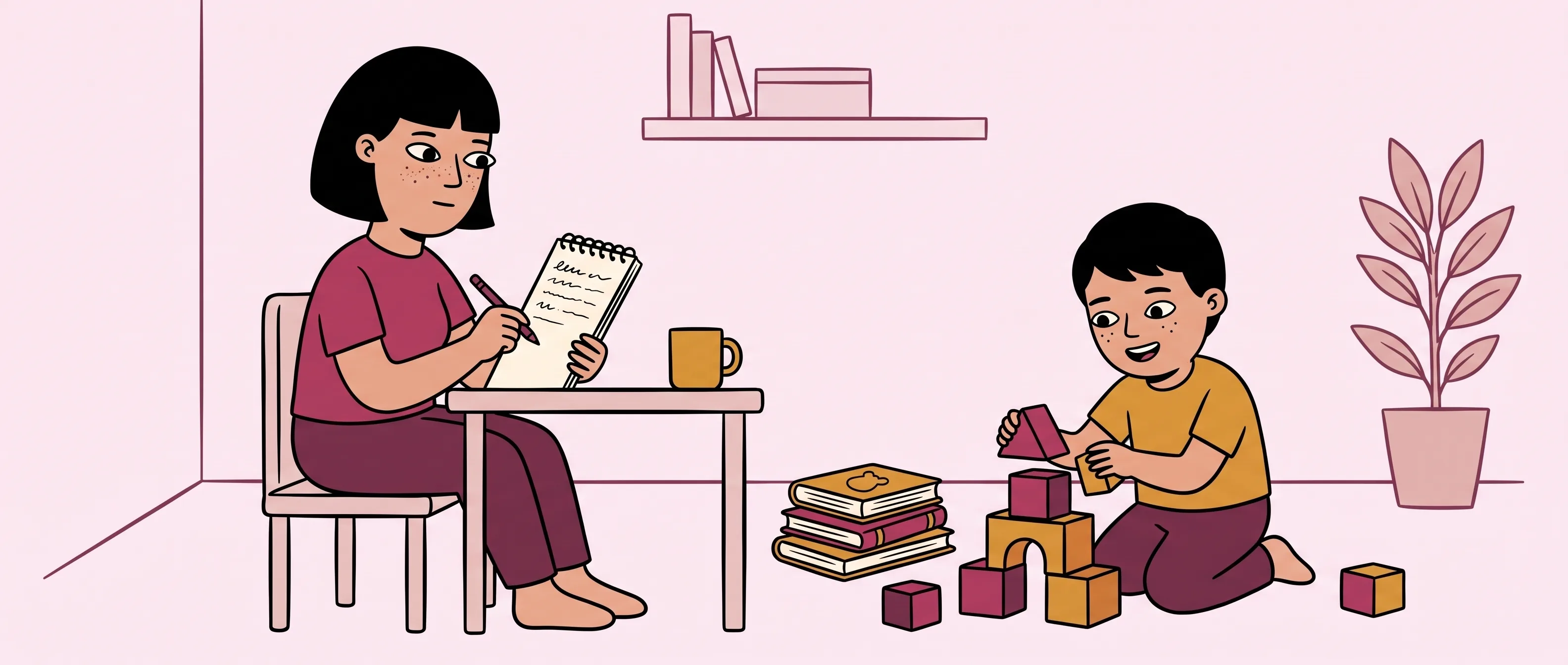
For a few days, you could make brief notes on your phone. They do not need to be detailed - two or three sentences after the situation are enough. Over time, a clear pattern may emerge.
Write down:
- What was happening before they threw something?
For example: playtime ending, being refused something, noise, conflict with a sibling or being rushed.
- What time was it, and where were you?
Does the situation repeat in the evening, after preschool, in the shop or before dinner?
- What helped your child calm down?
Perhaps they needed movement, water, quiet, a cuddle or a moment close to you.
Try not to judge yourself or your child. These notes are meant to make everyday decisions easier, not to find someone to blame.
How to respond when your child throws a toy: a step-by-step plan
First, distinguish the situation
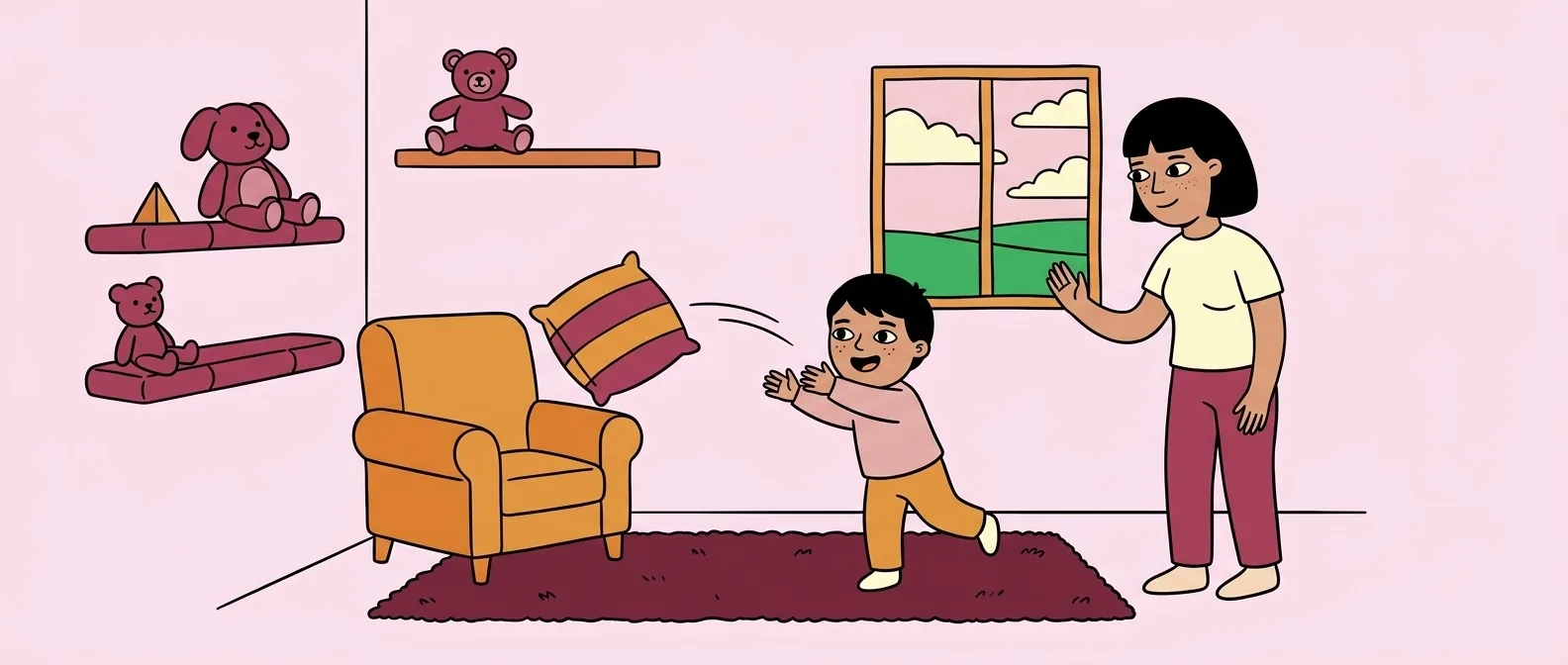
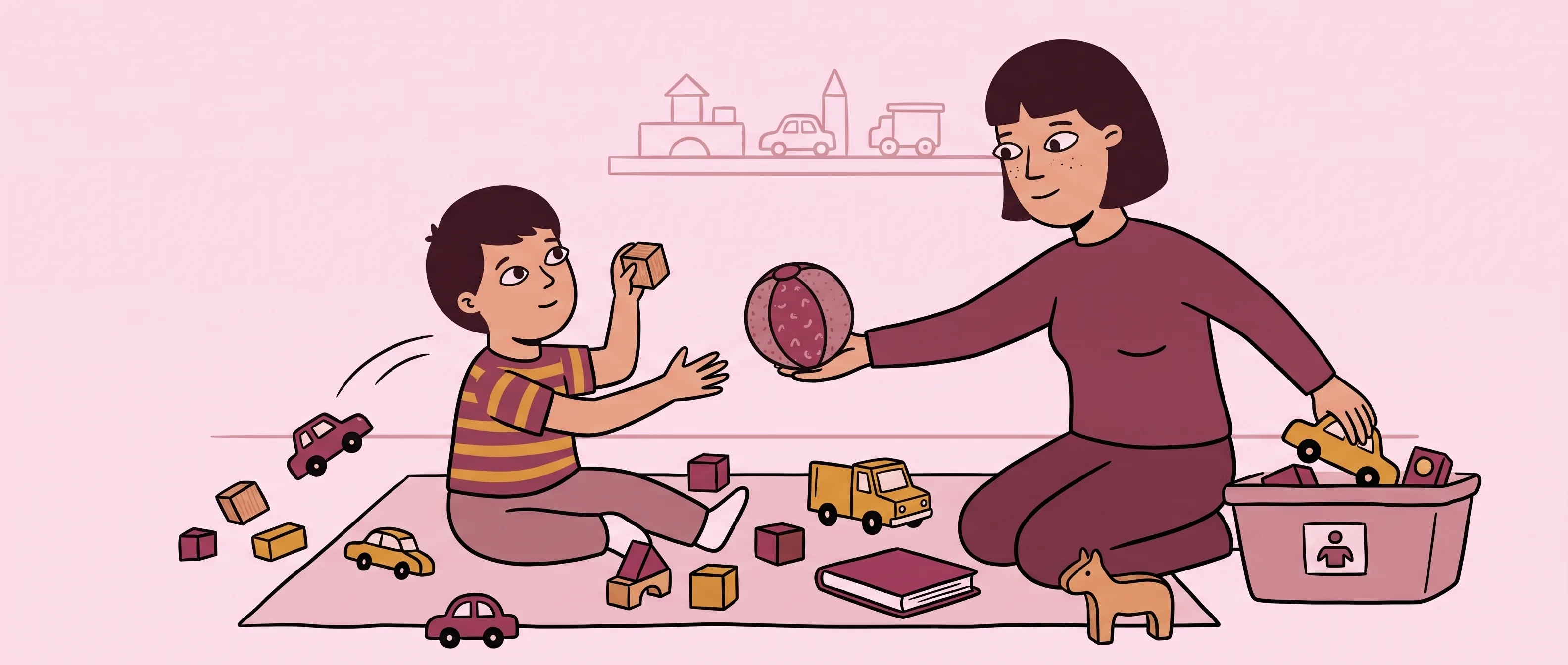
Not every time a child throws an object means the same thing. If your child is exploring how a light toy rolls or falls during play, move close and show them the safe rule: “You can throw this ball into the basket, but we put blocks down on the floor.” You can then play together with a soft ball, throwing it into a basket or box.
Respond differently if your child angrily throws things at people or reaches for a hard, heavy or dangerous object. In that case, stop the situation straight away, move the item away and say briefly: “I won’t let you throw things at people. I’m putting this away so everyone is safe.” Only return to talking about what happened once your child has calmed down.
In a difficult moment, a simple approach works best. Long explanations can wait, because a child experiencing big emotions will not process many words anyway. First, focus on what is happening here and now.
1. Keep people and the surroundings safe first
If your child is holding a heavy, hard or glass object, move it out of reach. If other children, pets or older people are nearby, move them to a safe place. You do not need to do this abruptly - what matters is acting decisively.
If an object has hit someone on the head, face or another sensitive area, check whether they need help. If there is severe pain, bleeding, significant swelling or other worrying symptoms, seek medical help.
In that moment, do not ask, “Why did you do that?” Stop the risk first.
2. Limit access to things that can be thrown
You can calmly take the toy away or place it higher up. If your child tries to throw more objects, remove anything nearby that could cause harm. There is no need to pull an item from their hand or tug at your child.
At home, it may sometimes be enough to move to another room or sit somewhere quieter for a moment. When you are out, you can step a little away from crowds, shop shelves or the playground. A change of place often reduces stimulation.
3. Say one short sentence
When emotions are running high, choose a simple message. Say it in a low, calm voice and do not add a long explanation.
You can use phrases such as:
- “I won’t let you throw things.”
- “Stop. I’m putting this away.”
- “We don’t throw things at people.”
- “I’m taking the toy away so everyone is safe.”
- “You can be angry, but you cannot hurt people.”
You do not need to repeat the sentence many times. One clear boundary, followed by action, usually sounds calmer and is easier to understand.
4. Return to the conversation once your child has calmed down
Wait until your child has slowed down a little: they have stopped shouting, started responding or are able to sit beside you. Only then put the situation into simple words. You could say, “I think you really did not want to stop playing,” or “That was too much noise all at once.”
Then offer one alternative for next time. Do not overwhelm your child with questions or suggestions. One small step that they can remember is enough.
For example:
- “Next time, say: ‘Help me.’”
- “When you are angry, you can stamp your feet.”
- “If you want to throw something, we can use a soft ball.”
- “You can put the toy next to me when you have had enough.”
When your child throws things at people, the situation needs a quick boundary
Throwing something towards another person needs to be stopped immediately. Do not wait for your child to calm themselves if someone could be hit. Move between your child and the other person, put the object away and say briefly: “I won’t let you throw things at people.”
There is no need to shame your child or say that they are “naughty”. The behaviour is unsafe, but your child still needs a calm adult beside them. You can combine the boundary with naming the emotion: “I can see that you are furious. I’m here, but I won’t let you throw things.”
At home: prepare the space for more difficult moments
If throwing happens regularly, it can help to simplify the environment. Keep heavy decorations, glassware and sharp objects out of your child’s reach. This is not a punishment or an overreaction - it is simply about keeping everyone safe.
It may also help to limit the number of toys available at one time. When there are fewer things around, it is easier to manage the situation. You can put some toys away and rotate them every few days.
When tension is building, suggest a simple change:
- moving to a quieter room;
- a few jumps or rolling around on the carpet;
- throwing a soft ball into a basket;
- a drink of water;
- a moment of quiet beside you.
In a shop, waiting room or playground: keep it simple
Being in public can bring extra stress because other people are watching. Try not to make decisions based on that pressure. The most important thing is the safety of your child and the people nearby, not how the situation looks from the outside.
Move close, take the object away and say, “Stop, we don’t throw that. We’re going to step aside for a moment.” If you can, move to a quieter place. Sometimes a sip of water, a short walk or a simple task, such as holding a light bag, can help.
When you return home or once your child has calmed down, you can consider what was too difficult. Perhaps the outing lasted too long, your child was hungry, or there was too much noise around.
How can you teach your child what to do instead of throwing?
It is best to teach new strategies when things are calm. In the middle of anger, your child does not have the capacity to practise long sentences or analyse their behaviour. A short conversation while building blocks, on a walk or before bedtime will be much more helpful.
Start with one simple phrase. For a younger child, this may be a gesture, picture or word: “help”, “stop”, “no”. An older child can practise phrases such as: “I’m angry”, “I need a break” or “I can’t do it”.
Give your child ready-made options
Instead of asking, “What do you want to do?”, offer two safe choices. It is easier to choose something specific than to come up with a solution independently in a tense moment.
You could say:
- “Would you rather throw a ball into the basket or stamp your feet?”
- “Would you like to hug a pillow or sit beside me?”
- “Would you rather say ‘help me’ or point with your finger?”
- “Do you need some water or a short break?”
See which solutions your child accepts. One child may like movement, another may need a moment of quiet, while another may prefer squeezing a pillow or modelling dough firmly.
Create a safe space for movement and emotions
Your child does not need to stop feeling angry or excited. Instead, they need to learn what they can do with that tension without throwing hard objects. It helps when safe options are available straight away.
You can prepare:
- a soft ball and a basket or box as a target;
- pillows for squeezing and cuddling;
- modelling dough for kneading;
- old sheets of paper to tear up;
- an open space for jumping, stamping or marching quickly.
It is important to clearly distinguish these activities from throwing objects around the house. You can say: “We don’t throw blocks. You can throw the ball into the basket.”
Consequences after throwing a toy – how to set a boundary without shaming?
A consequence does not have to mean a harsh punishment. Its purpose is to show your child what happens after an object is used in an unsafe way. If a toy has been thrown, it may no longer be available for a while.
Say calmly: “I’m putting the car away because it was used for throwing. We can come back to it later.” A short break is usually enough, especially for a younger child. Taking away a favourite toy for the whole day is often no longer connected in their mind to what happened earlier.
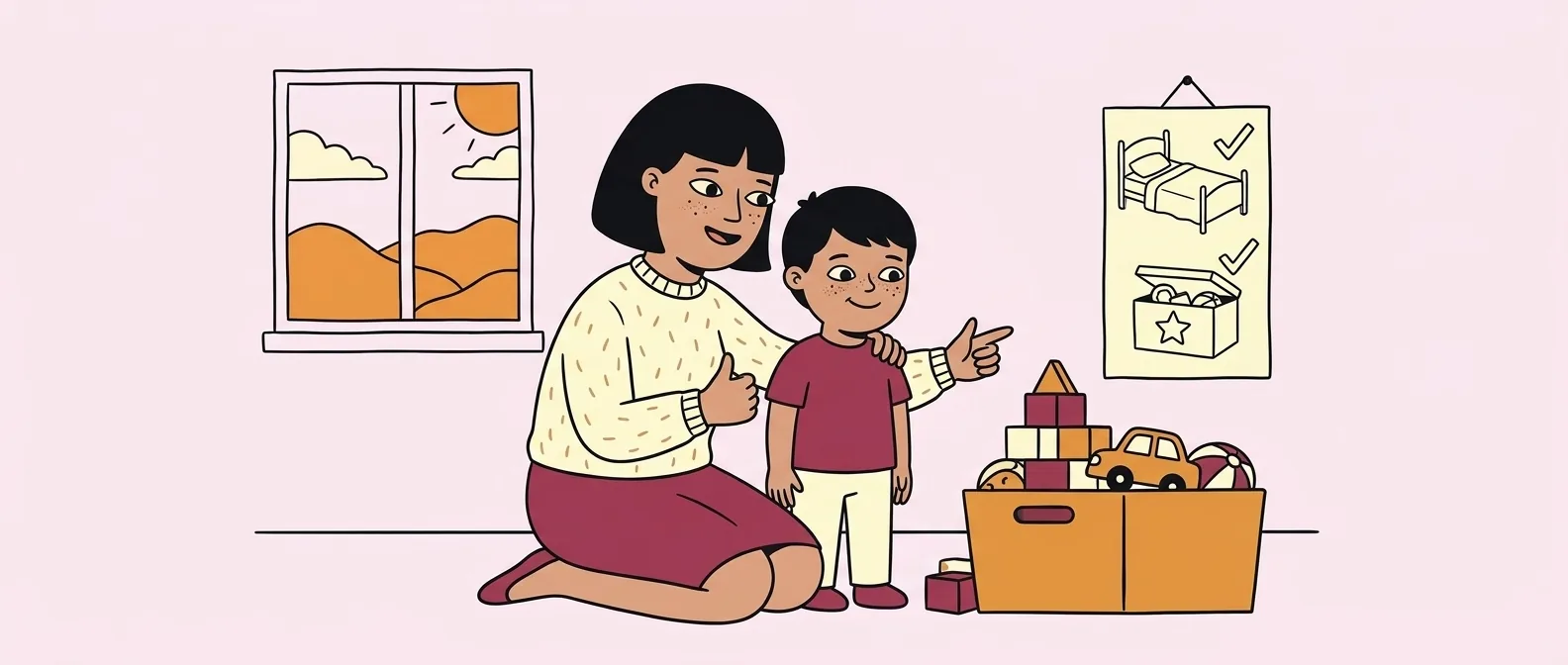
Once your child has calmed down, it is also worth returning to the effects of what happened. If blocks are scattered, your child can help pick them up. If something was spilled, they can bring a cloth. If an object was damaged, you can check together whether it can be repaired.
This teaches a simple message: after a difficult moment, we can put things right and try a different way next time.
What is best to avoid?
Some responses give a temporary sense of control, but they usually do not help a child learn new behaviour. Try to avoid:
- shouting and long lectures;
- making fun of your child;
- calling them “bad” or “naughty”;
- threats that are unrelated to the situation;
- forcing an apology while your child is still very upset;
- giving the toy back immediately without holding the boundary.
Instead of only saying, “Say sorry!”, you could try: “Let’s see what we can do now.” Your child may be able to help, bring something that is needed or simply reconnect when they are ready.
How can you reduce these situations in everyday life?
It is impossible to avoid difficult emotions completely. However, you can make sure your child has more opportunities for rest, movement and calm connection. This often reduces the tension that may later come out through throwing.
In practice, it is worth taking care of a few simple things:
- give advance warning when playtime is ending: “In five minutes, we’ll tidy up the blocks”;
- offer water and a small snack before a longer outing;
- give your child some time to rest after preschool or school;
- reduce rushing where possible;
- plan at least a few minutes of shared attention every day without correcting your child;
- share the same short response guidelines with other caregivers.
Predictability is especially helpful when plans change. If something suddenly changes, name it in advance: “We’re not going to the playground today because it’s raining. After lunch, we’ll make an obstacle course at home.”
This is not about having a perfectly planned day. It is enough for your child to more often know what to expect and where they can find support.
When is it worth speaking with a paediatrician or psychologist?
Throwing toys every day does not necessarily mean there is a serious problem. However, it is worth discussing the situation if the behaviour is frequent, intense or becoming hard to manage despite calm, consistent responses at home.
Consider speaking with a paediatrician or psychologist if:
- your child regularly hurts themselves or others;
- they often use heavy or dangerous objects;
- the damage at home is serious;
- the difficult behaviour clearly interferes with life at preschool, school or in relationships;
- you notice that your child finds it very difficult to return to calm for an extended period;
- you feel that the situation is overwhelming or worrying.
A consultation can help organise your observations and look at the situation more broadly. It is not a judgement of your parenting or a label for your child.
Summary
When your child throws things, start by protecting people and the surroundings. Then set a brief boundary without shouting or shaming: “I won’t let you throw things.” Save the conversation about emotions and other options for when the tension has eased.
Over time, your child can learn to ask for help, take a break, stamp their feet, squeeze a pillow or throw a soft ball in a designated place. It does not have to work the first time - what matters is calmly repeating the same rules.
If you would like to organise your situation and consider the next steps, complete the BehaviorComplainer consultation form.
Sources
- American Academy of Pediatrics (AAP), “Top Tips for Surviving Tantrums”.
- American Academy of Pediatrics (AAP), “What’s the Best Way to Discipline My Child?”.
- National Health Service (NHS), “Dealing with child behaviour problems”.